
Dazu Rock Carvings
Chinese religious rock carvings from the 7th to 13th centuries.

xiquinhosilva · CC BY 2.0
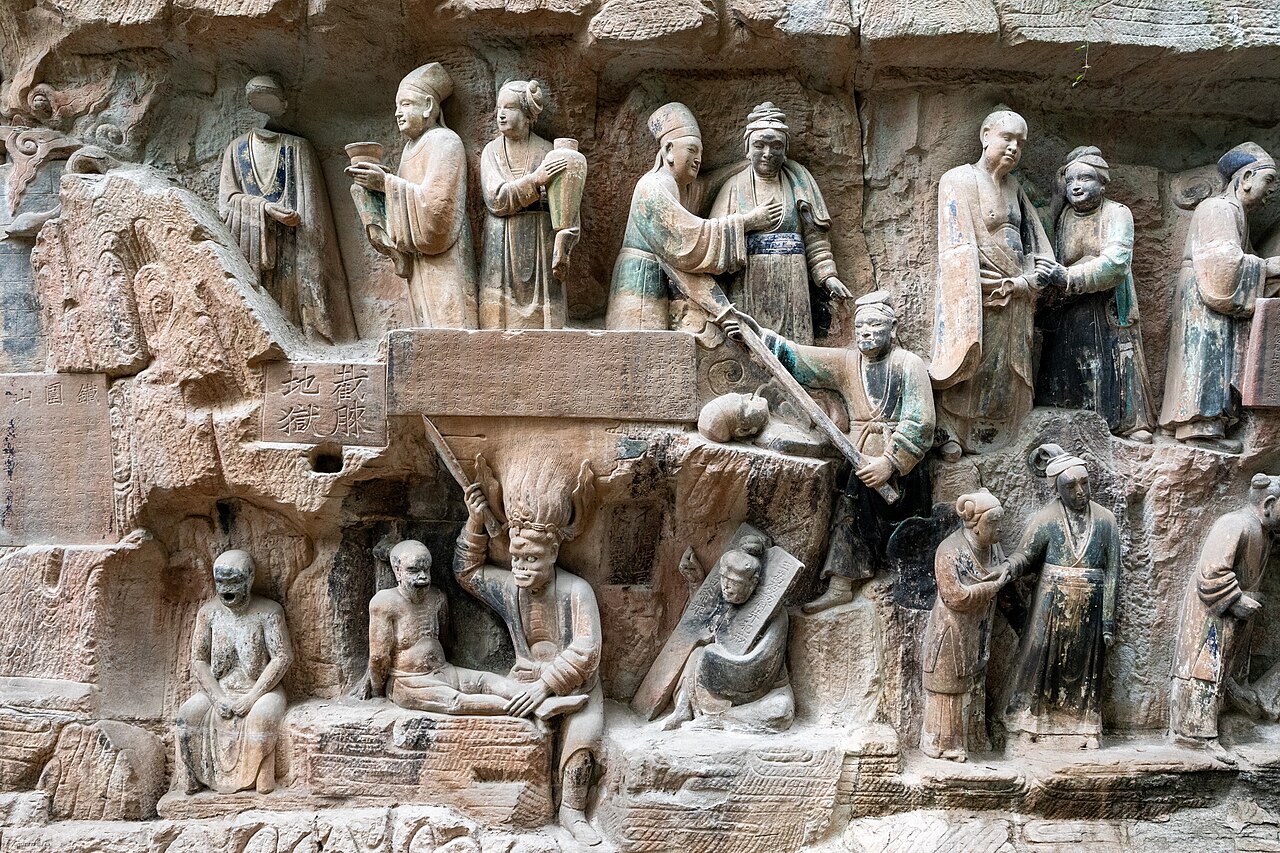
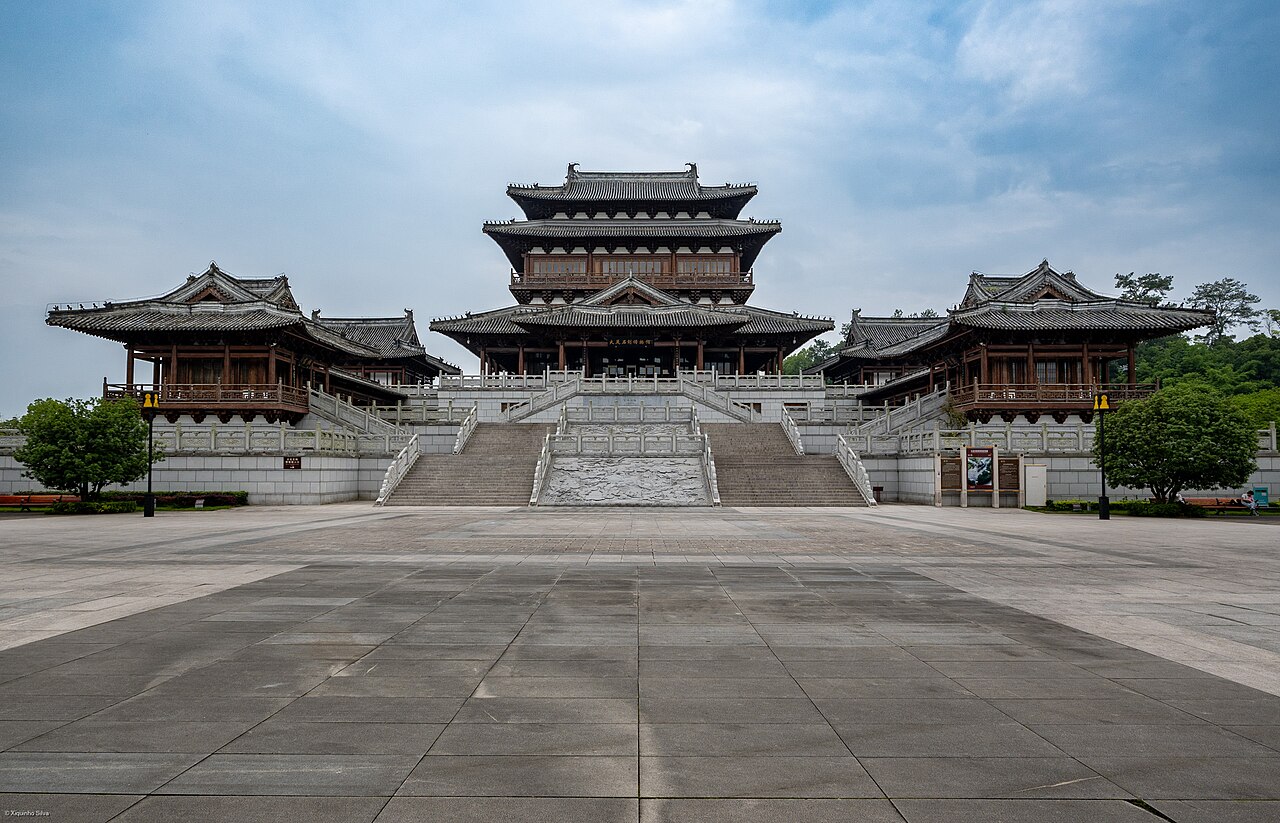
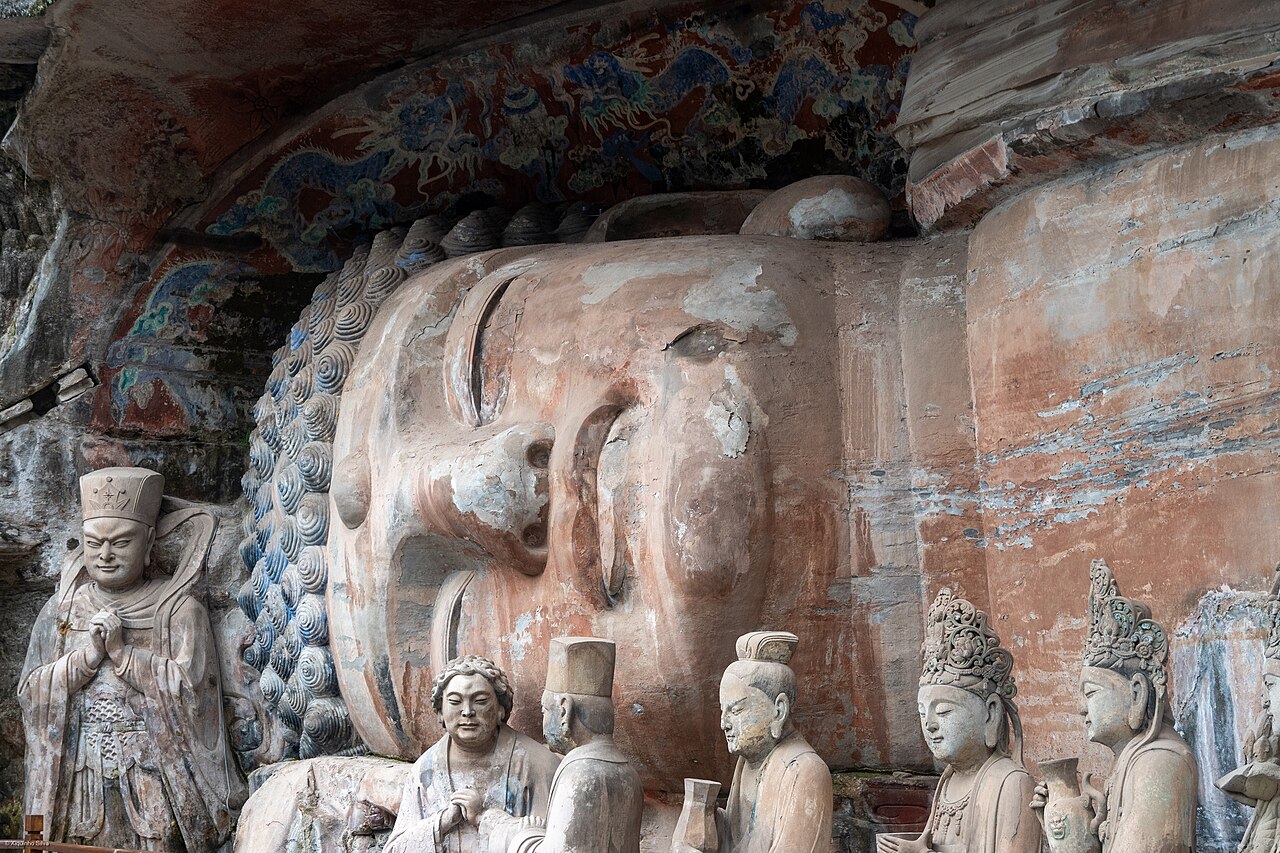
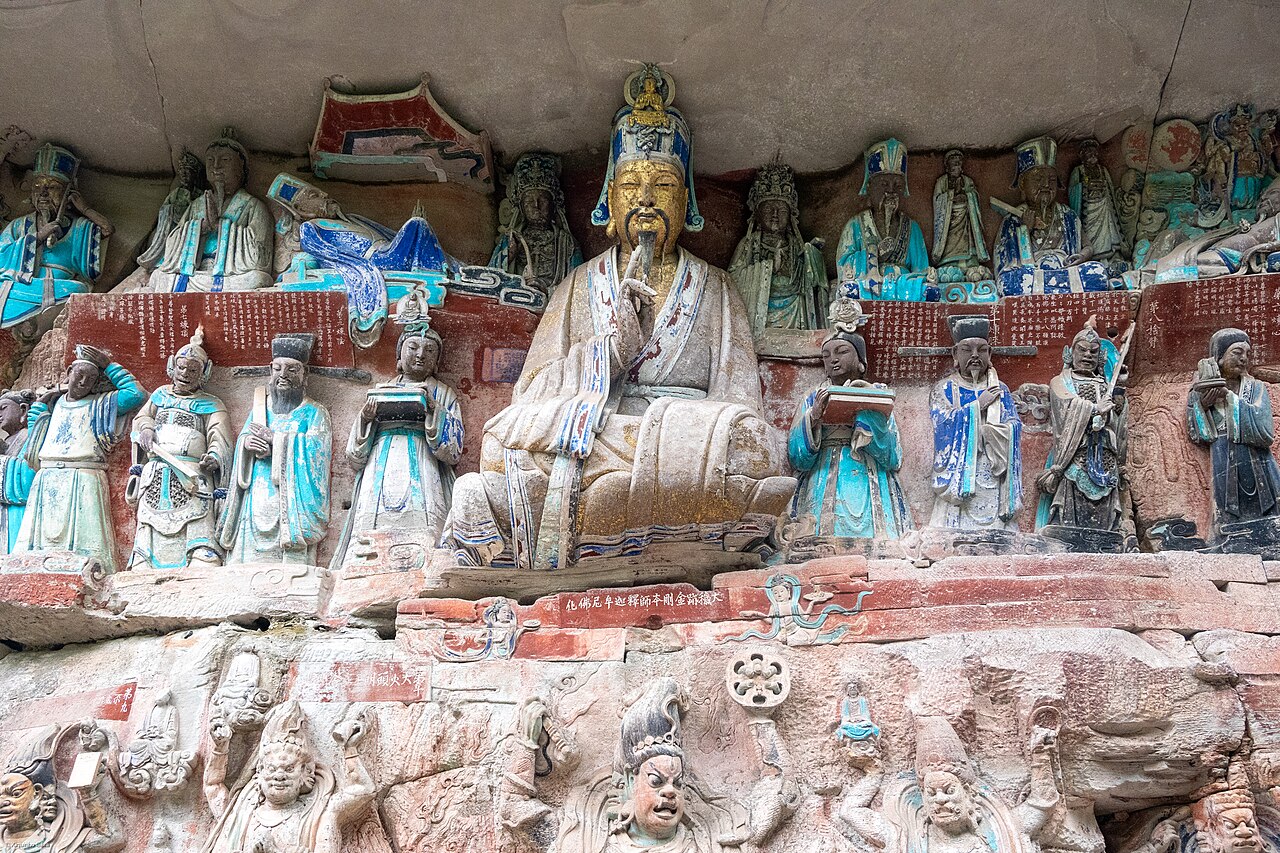
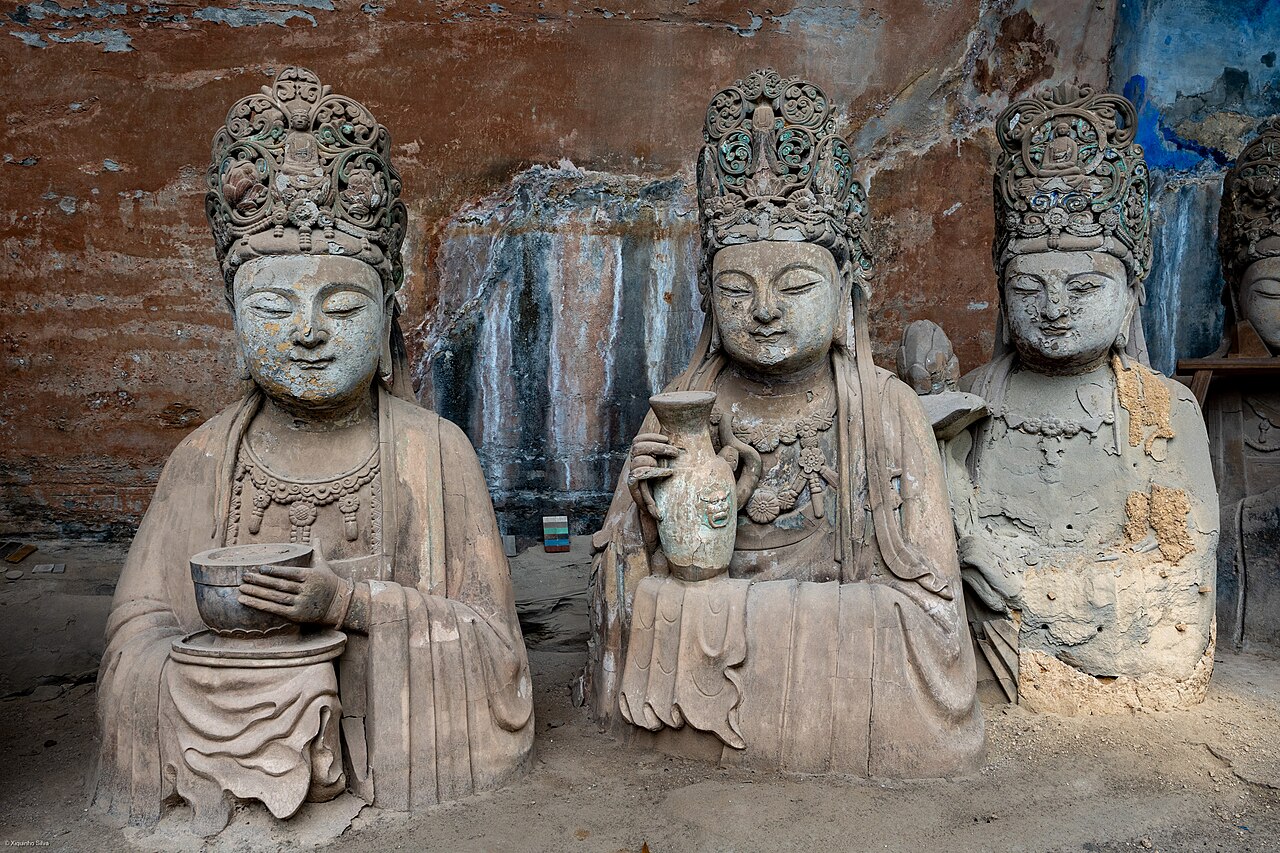
The Dazu Rock Carvings are a series of Chinese religious sculptures and carvings located in Dazu District, Chongqing, China. Listed as a UNESCO World Heritage Site in 1999, they comprise 75 protected sites containing some 50,000 statues and over 100,000 Chinese characters forming inscriptions and epigraphs. The carvings date from the 7th century AD onward and depict Buddhist, Confucian, and Taoist beliefs, with many carved into open rock faces or in rock-cut cave shrines.
- location
- Dazu District, Chongqing, China
- period
- 7th to 13th century AD
- number_of_sites
- 75
- number_of_statues
- 50000
- inscription_characters
- 100000
- world_heritage_site_year
- 1999
- religions_depicted
- Buddhism, Taoism, Confucianism
Lore & Background
The technique for rock carvings may have originated in ancient India. The earliest carvings date from the 7th century, with specific early examples on Mount Beishan beginning around 892 AD during the late Tang dynasty. The main period of creation began in the late 9th century, when Wei Junjing, Prefect of Changzhou, pioneered the carvings on Mount Beishan. His example was followed after the collapse of the Tang dynasty by local gentry, monks, nuns, and ordinary people during the Five Dynasties and Ten Kingdoms period (907–65).
In the 12th century, during the Song dynasty, a Buddhist monk named Zhao Zhifeng began work on the elaborate sculptures and carvings on Mount Baoding, dedicating 70 years of his life to the project. Unlike most collections of rock carvings, the Dazu rock carvings include statues representing all three major religions: Buddhism, Taoism, and Confucianism.
Access to the carvings was limited for many years; they were opened to Chinese travelers in 1961 and to foreign visitors later, though the exact year varies by source. Until 1975, there was only a muddy path between the town of Dazu and the main cluster of carvings.
Reader's Guide
The Dazu Rock Carvings are significant as a UNESCO World Heritage Site recognized for their aesthetic quality, rich diversity of subject matter (both secular and religious), and the light they shed on everyday life in China during the period of their creation. They provide outstanding evidence of the harmonious synthesis of Buddhism, Taoism, and Confucianism. The carvings span multiple centuries, from the 7th to the 13th century, and are located across five sites in Dazu District: Beishan, Baodingshan, Nanshan, Shizhuanshan, and Shimenshan. Highlights include the Tantric Buddhist and Taoist themes at Beishan, the secular life depictions at Baodingshan, and the unique integration of all three religions at Shizhuanshan. The carvings were pioneered by Wei Junjing in the late 9th century and later expanded by monk Zhao Zhifeng in the 12th century. Opened to Chinese travelers in 1961 and foreign visitors in 1980, the site remains a major cultural and historical treasure.
Did You Know?
- The Dazu Rock Carvings include over 100,000 Chinese characters forming inscriptions and epigraphs.
- The carvings were pioneered in the late 9th century by Wei Junjing, Prefect of Changzhou.
- Monk Zhao Zhifeng dedicated 70 years of his life to the carvings on Mount Baoding.
- The carvings were opened to Chinese travelers in 1961, with foreign visitors gaining access in later years.
Scale & Composition of the Carving Complex
The Dazu Rock Carvings represent one of the most extensive collections of religious stone art in China, spread across five distinct mountain locations in Dazu District, roughly 165 kilometers west of Chongqing's urban center. The five sites—Beishan, Baodingshan, Nanshan, Shizhuanshan, and Shimenshan—together form 75 protected areas housing approximately 50,000 sculpted figures and more than 100,000 carved Chinese characters serving as inscriptions and epigraphs. The carvings take diverse forms: some occupy traditional rock-cut cave shrines following the familiar Chinese Buddhist grotto model, while many others appear as open-air rock reliefs hewn directly into exposed cliff faces. Beishan stretches 300 meters along a cliff and features 9th- to 12th-century Tantric Buddhist and Taoist imagery. Baodingshan spans 500 meters in a U-shaped valley near the Longevity Pavilion, blending Tantric Buddhist themes with scenes of secular daily life. Nanshan preserves Song Dynasty Taoist symbols alongside a historical stele documenting Sichuan's experience after a 13th-century Mongol invasion. Shizhuanshan and Shimenshan, both 12th-century works, further expand the theological and iconographic range.
The Unique Tripartite Religious Synthesis
What sets the Dazu collection apart from most other rock carving traditions in China is its deliberate and harmonious integration of three major philosophical and religious systems: Buddhism, Taoism, and Confucianism. While many grotto sites elsewhere focus on a single tradition, Dazu weaves all three together within the same landscapes and even the same individual sites. Shizhuanshan stands out as a particularly striking example, where early 12th-century sculptures depicting Taoist, Confucian, and Buddhist figures coexist in a single rock-hewn complex. Beishan pairs Tantric Buddhist imagery with Taoist themes along its 300-meter cliff face, and Baodingshan layers Tantric Buddhist subjects alongside vivid portrayals of everyday secular life. This tripartite synthesis was so significant that UNESCO specifically cited it in 1999 as outstanding evidence of the harmonious synthesis of Buddhism, Taoism and Confucianism when granting World Heritage status. The result is a stone archive that captures not only devotional practice but the full spectrum of spiritual and ethical thought guiding Chinese society across several centuries.
Key Figures and the Multi-Century Creative Effort
The carving tradition at Dazu traces its origins to 650 AD during the early Tang dynasty, though the technique itself may have roots in ancient India. The project truly accelerated in the late 9th century when Wei Junjing, serving as Prefect of Changzhou, pioneered the first major carvings on Mount Beishan. After the Tang dynasty collapsed, his example inspired a broad cross-section of society—local gentry, Buddhist monks and nuns, and ordinary citizens—to continue the work throughout the Five Dynasties and Ten Kingdoms period (907–965). The 12th century brought another transformative figure: the Buddhist monk Zhao Zhifeng, who devoted a remarkable 70 years of his life to sculpting the elaborate compositions on Mount Baoding. At Shizhuanshan, the most prominent grotto sculptures are attributed to Wen Wijian, a celebrated sculptor of the era. This multi-generational, multi-century effort produced a body of work spanning from the 7th through the 13th century, with each generation adding new theological emphases and artistic refinements to the growing collection.
From Isolation to World Heritage Recognition
For centuries, the Dazu carvings remained largely hidden from the outside world. The sites were officially closed to visitors for many years, and even after access was gradually granted, the experience of reaching them was arduous. Chinese travelers were first permitted to visit in 1961, and foreign visitors were not admitted until 1980. Until 1975, the only route connecting the town of Dazu to the main cluster of carvings was a muddy path, underscoring how isolated and difficult the sites had been to reach. The turning point came in 1999, when UNESCO inscribed the collection as a World Heritage Site. The citation praised the carvings for their aesthetic quality, the rich diversity of both secular and religious subject matter, and the unique window they offer into everyday Chinese life during the medieval period. UNESCO also highlighted the outstanding evidence the sites provide of the harmonious coexistence of Buddhism, Taoism, and Confucianism. Today, a dedicated railway station—Dazushike—on the Chengdu-Chongqing Central high-speed line is under construction, signaling a new era of accessibility for this extraordinary cultural treasure.
Gallery
Frequently Asked Questions
What are the Dazu Rock Carvings?
They are a vast collection of religious sculptures carved directly into living cliff faces and rock-cut cave shrines in Chongqing, China. The ensemble blends Buddhist, Confucian, and Taoist imagery across 75 protected locations and spans from the 7th century onward.
Where exactly are the Dazu Rock Carvings located?
The carvings sit in Dazu District, a part of the municipality of Chongqing in southwestern China. The 75 individual sites are spread across the district's hillsides and rocky outcrops rather than being concentrated in a single temple complex.
How many statues and inscriptions do the Dazu Rock Carvings contain?
The complex holds roughly 50,000 individual statues alongside more than 100,000 Chinese characters carved as inscriptions and epigraphs. This density of sculptural and textual work makes it one of the most extensive religious rock-art assemblages in China.
Which religions are represented in the Dazu Rock Carvings?
The sculptures draw on all three major Chinese traditions—Buddhism, Confucianism, and Taoism—sometimes within the same cave or cliff face. This unusual coexistence of faiths in a single rock complex is a central reason the site earned its 1999 UNESCO World Heritage designation.
When were the Dazu Rock Carvings created and when did they gain World Heritage status?
The carvings were produced over roughly six centuries, from the 7th through the 13th century AD. UNESCO formally inscribed the site on its World Heritage list in 1999, recognizing its outstanding artistic and cultural value.
More in World Heritage Sites in China 1-24
Spotted an error? Know more?
This is a living reference — every entry is fact-audited, and reader corrections feed straight into our audit queue. Suggest an edit · See this site's audit record