
Cemetery of Confucius
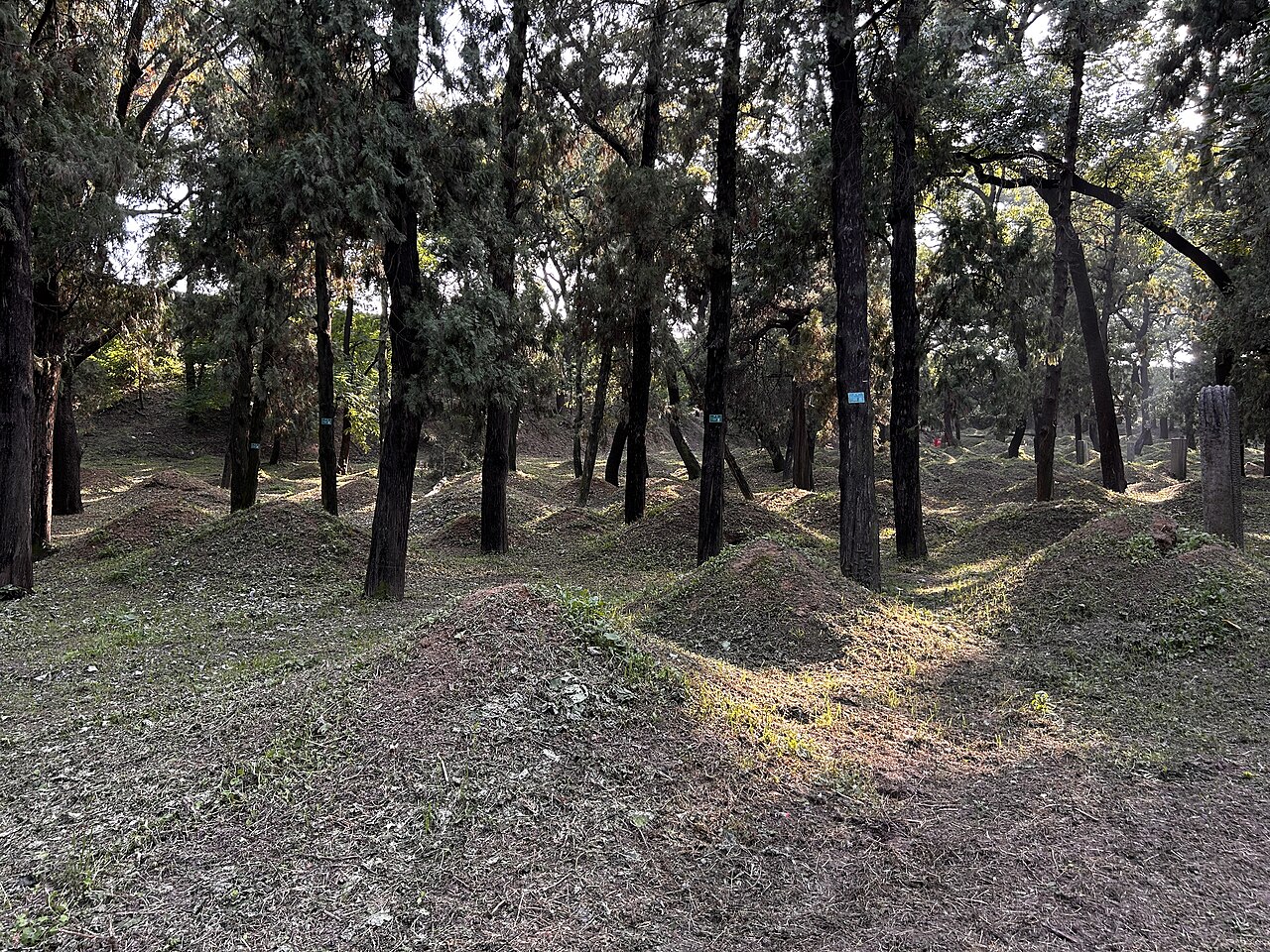
Cemetery of Confucius and his descendants in Qufu, China.

Scott Edmunds · CC BY 2.0
The Cemetery of Confucius, also known as Kong Lin, is a burial ground for the Kong clan—the descendants of the philosopher Confucius—located in Qufu, Shandong province, China. It has been part of a UNESCO World Heritage Site since 1994, together with the Temple of Confucius and the Kong Family Mansion, collectively called the 'Three Confucian sites.'
- location
- Qufu, Shandong province, China
- area
- 183.33 hectares (1.8333 km²)
- perimeter_wall_length
- 5,591 meters
- number_of_tombs
- over 100,000
- oldest_graves
- Zhou dynasty
- stone_tablets
- 4,003 (including 3,000+ from imperial period)
- mature_trees
- over 10,000
Lore & Background
By the 2nd century AD, at least 50 of Confucius's descendants had been buried alongside him. In 1331, construction began on the wall and gate, and the cemetery underwent 13 renovations and extensions. By the late 18th century, the perimeter wall reached approximately 5.6 km (5,591 meters), enclosing an area of 183.33 hectares (1.8333 km²). The oldest graves date to the Zhou dynasty, with the most recent belonging to descendants in the 76th and 78th generations. During the Song-Jin wars, a story claims that Wanyan Zonghan's soldiers wanted to dig up Confucius's tomb, but after being told Confucius was a great saint, Zonghan executed those soldiers; however, this tale is not found in reliable historical records and appears to be apocryphal. In November 1966, during the Cultural Revolution, Red Guards vandalized the cemetery, reportedly removing the corpse of the 76th generation Duke Yansheng Kong Lingyi and desecrating it; however, specific details about the leader Tan Houlan and the exact manner of desecration are not consistently verified in authoritative historical accounts.
Reader's Guide
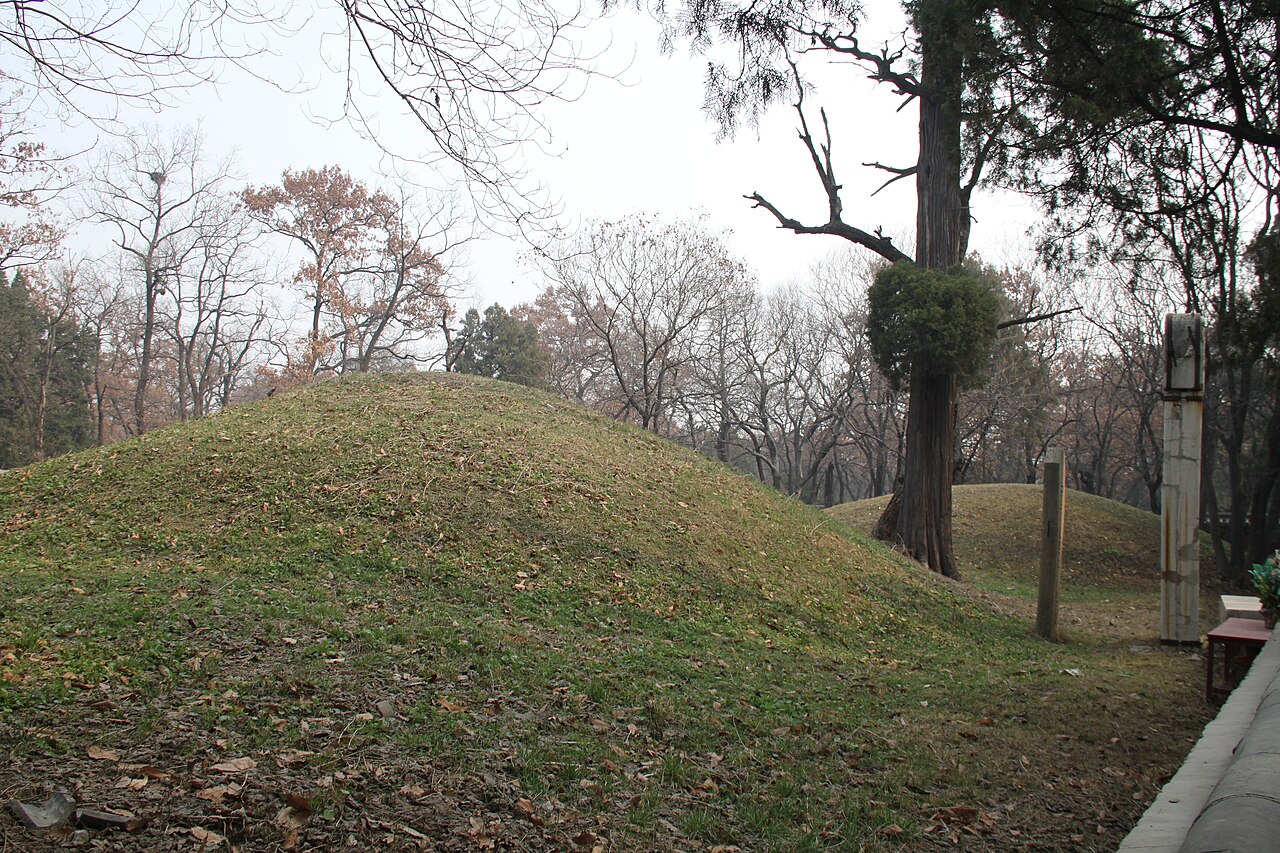
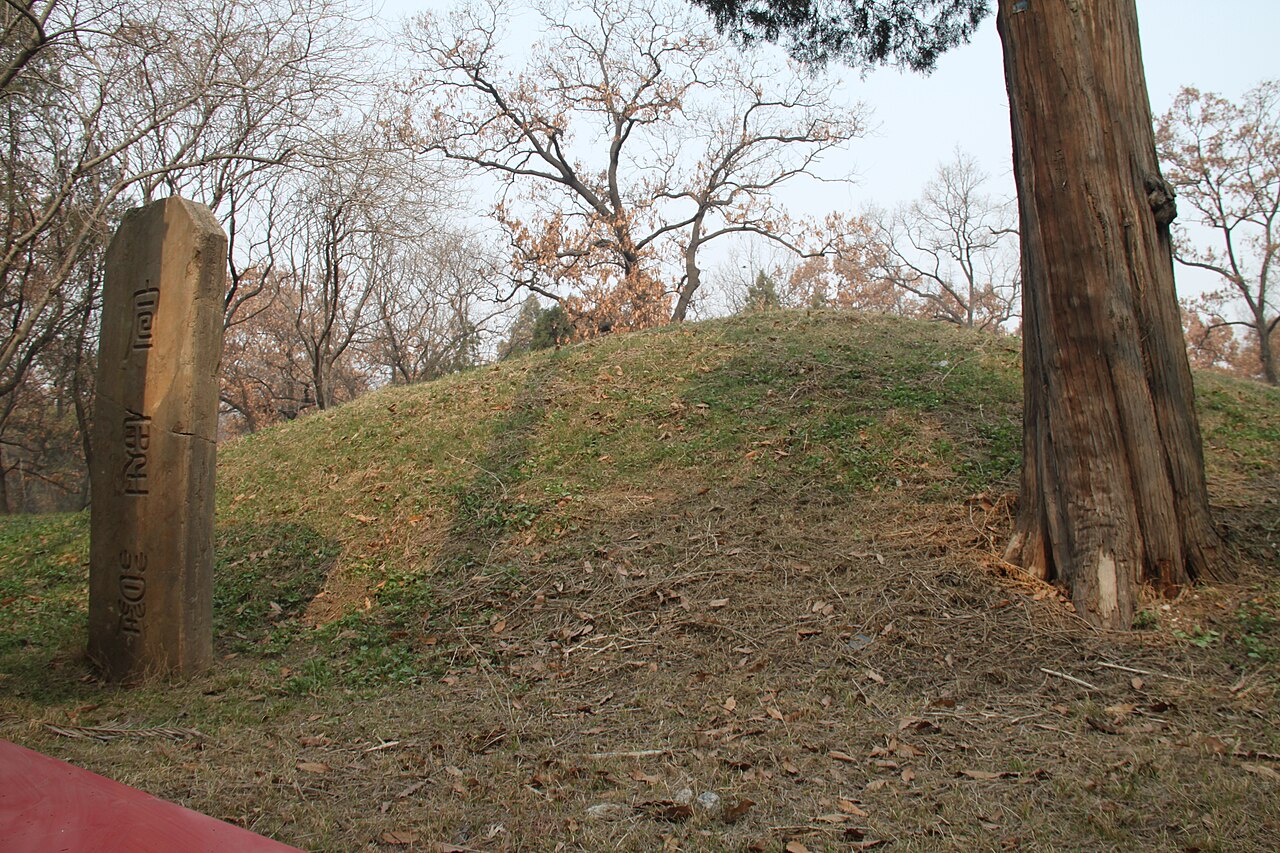
The Cemetery of Confucius is a key component of the UNESCO World Heritage Site 'Temple and Cemetery of Confucius and the Kong Family Mansion in Qufu,' recognized since 1994. It represents over 2,000 years of continuous burial of Confucius's descendants, with more than 100,000 tombs. The site includes the tomb of Confucius himself, originally shaped like an axe with a brick platform, now a cone-shaped hill. The cemetery's layout reflects status: Ming burials in the west, Qing in the east, with dukes' tombs featuring spirit ways with animal sculptures, arches, and stelae. The cemetery suffered damage during the Cultural Revolution but remains a significant historical and cultural site, preserving thousands of stone tablets from various Chinese dynasties.
Did You Know?
- The cemetery contains tombs of more than 100,000 descendants of Confucius, buried over about 2,000 years.
- A story from the Song-Jin wars claims that Wanyan Zonghan executed soldiers who wanted to dig up Confucius's tomb after being told he was a great saint, but this tale is not verified by reliable historical records.
- In 1966, Red Guards vandalized the cemetery, reportedly desecrating the corpse of Duke Kong Lingyi, though specific details are not consistently verified.
- The cemetery has over 10,000 mature trees, giving it a forest-like appearance.
Two Millennia of Burial
The Cemetery of Confucius stands as one of the longest continuously used burial grounds in the world. Over roughly two thousand years, the tombs of more than 100,000 members of the Kong clan have been laid to rest within its walls. The oldest graves trace back to the Zhou dynasty, while the most recent belong to descendants in the 76th and 78th generation of Confucius's line. By the second century AD, at least fifty descendants already rested beside the philosopher. The site has undergone thirteen recorded renovations and extensions, with construction on the perimeter wall and gate beginning in 1331. By the late 18th century, the enclosing wall stretched 7.5 kilometres around an area of 3.6 square kilometres. Today the cemetery occupies 183.33 hectares, bounded by a wall 5,591 metres long, and contains over three thousand standing stone tablets from China's imperial period, with the full count reaching 4,003 when Republican and modern-era tablets are included.
Noble Spirit Ways
Because Confucius's descendants were granted the hereditary title of Duke Yansheng and married into the imperial family, their burial sites carry the full regalia of aristocratic status. In the western section of the cemetery, a cluster of tombs belonging to dukes from the 55th through the 64th generation is arranged chronologically in rows running south to north. Each duke's site features a dedicated spirit way oriented from south to north, lined with a sequence of sculptural elements: three pairs of animals (felines, sometimes depicted with wings, rams, and horses), a memorial arch, a bixi beast supporting a stele, two guardian figures—a warrior on the western side and a civil official on the eastern side—and a final stele before the small tumulus marking the burial. A smaller subsidiary area about 500 metres to the northeast holds additional spirit ways from the late Ming and early Qing periods. This elaborate arrangement reflects centuries of imperial patronage toward the Kong lineage.
Surviving Threats
The cemetery's history is marked by repeated attempts to desecrate it, and by acts of protection that preserved its sanctity. During the Song dynasty's wars against the Jurchen Jin, Wanyan Zonghan's forces occupied the surrounding region. When soldiers expressed a desire to dig up Confucius's tomb, Wanyan Zonghan asked his advisor Gao Xingrui who Confucius was. Told he was a great saint from ancient times, the Jurchen commander declared it unthinkable to disturb a saint's grave and executed the soldiers who had proposed the act. Far more recently, in November 1966, during the Cultural Revolution, a team of Red Guards from Beijing Normal University under Tan Houlan visited the site and caused serious damage. The corpse of Kong Lingyi, the 76th-generation Duke Yansheng (1872–1919), a late Qing official noted for his collaboration with Japan, was exhumed and hung naked from a tree in front of the palace. These episodes underscore how the cemetery has remained a flashpoint for political and cultural conflict.
A Forest of Stone and Timber
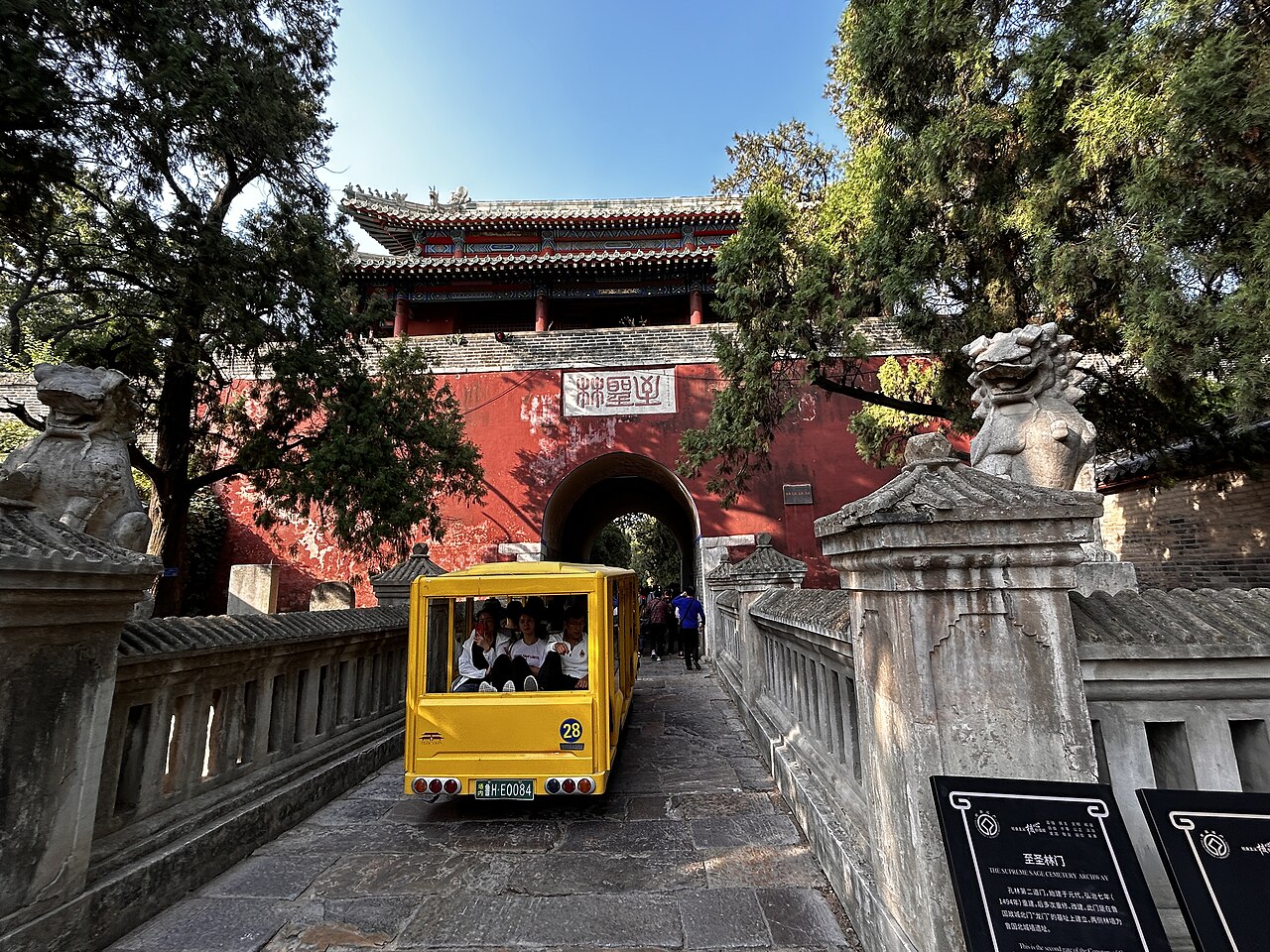
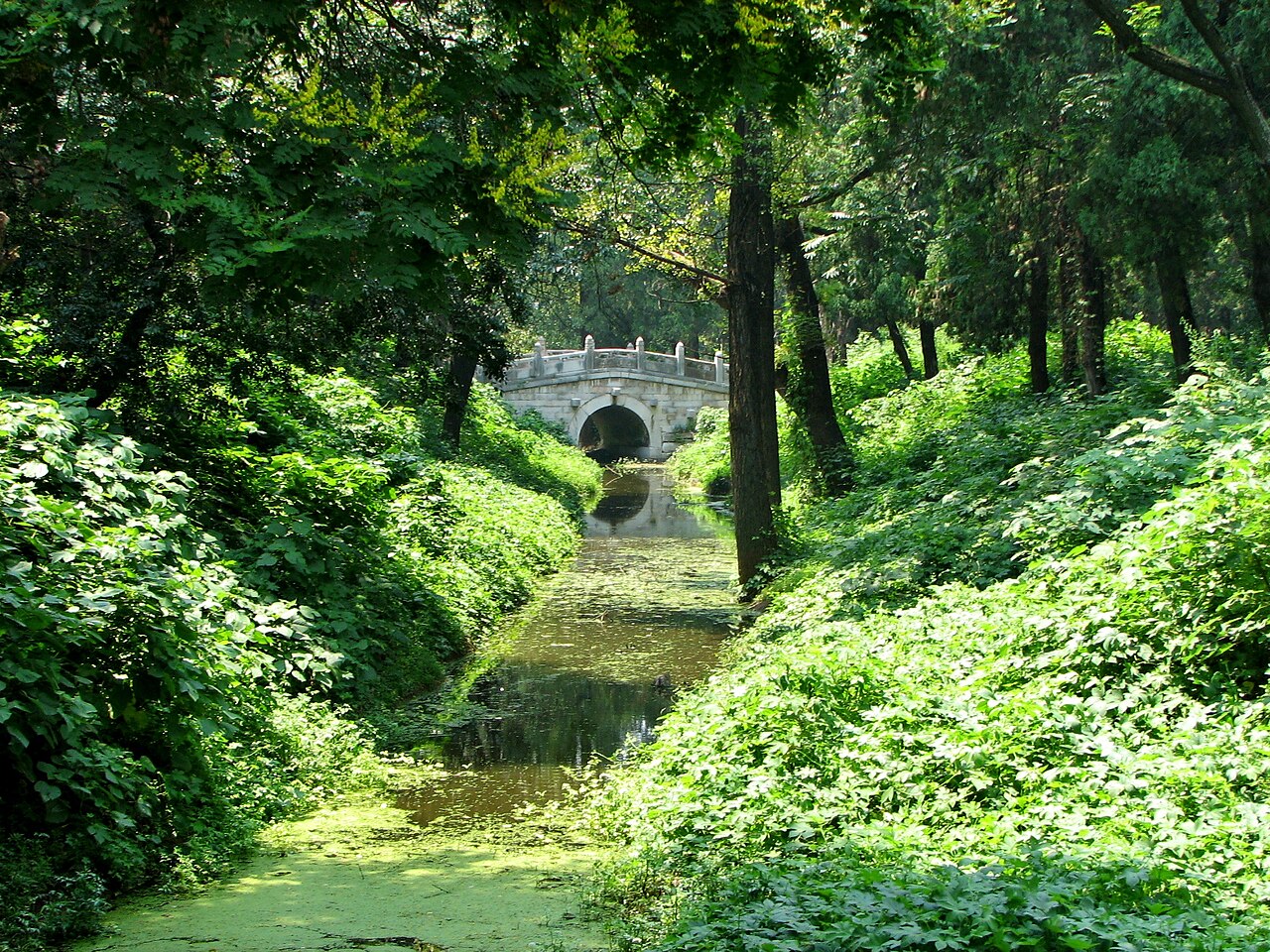
The Cemetery of Confucius derives its very name—Kong lin, or 'Kong Forest of gravestones'—from the dense canopy of more than 10,000 mature trees that give the grounds a woodland character. Situated roughly two kilometres north of the Temple and Kong Family Mansion within Qufu's walled city, the site is reached by a 1,266-metre boulevard that extends northward from the city's Drum Tower Avenue through the north gate. This approach is flanked by cypresses and pines and punctuated by the Wan gu chang chun memorial arch, whose characters invoke eternal spring. The original tomb of Confucius, erected on the bank of the Sishui River, took the shape of an axe and included a brick platform for sacrificial rites; the present-day marker is a cone-shaped earthen mound. Around this central tomb, descendant burials and commemorative stelae accumulated over the centuries, creating a landscape where stone monuments and living timber intertwine into a single, forested memorial space.
Gallery
Frequently Asked Questions
What exactly is the Cemetery of Confucius?
It is a vast burial ground in Qufu, Shandong province, dedicated to Confucius and his descendants, the Kong clan. Alongside the Temple of Confucius and the Kong Family Mansion, it forms the UNESCO-recognized 'Three Confucian Sites' group.
How big is the Cemetery of Confucius and how many graves does it hold?
The grounds cover roughly 183 hectares, enclosed by a perimeter wall stretching about 5.6 kilometres. Within those walls lie more than 100,000 tombs belonging to members of the Kong family.
Why did UNESCO designate the Cemetery of Confucius a World Heritage Site?
It was inscribed in 1994 as part of a combined nomination with the Temple and the Family Mansion, recognising the site as a living record of over two thousand years of Confucian tradition. The uninterrupted use of the burial ground by the Kong clan sets it apart from most heritage properties.
What are the 4,000-plus stone tablets in the Cemetery of Confucius?
They are grave markers and commemorative stelae, the vast majority (over 3,000) granted during China's imperial era to honour specific Kong descendants. Collectively they form a physical archive of the family's centuries-long relationship with the state.
How far back does the Cemetery of Confucius's history go?
The oldest graves on the grounds date to the Zhou dynasty, pushing the site's history past 2,500 years. It has served as the Kong clan's ancestral burial ground continuously since Confucius's own era.
More in World Heritage Sites in China 1-24
Spotted an error? Know more?
This is a living reference — every entry is fact-audited, and reader corrections feed straight into our audit queue. Suggest an edit · See this site's audit record