
Capital Cities and Tombs of the Ancient Koguryo Kingdom
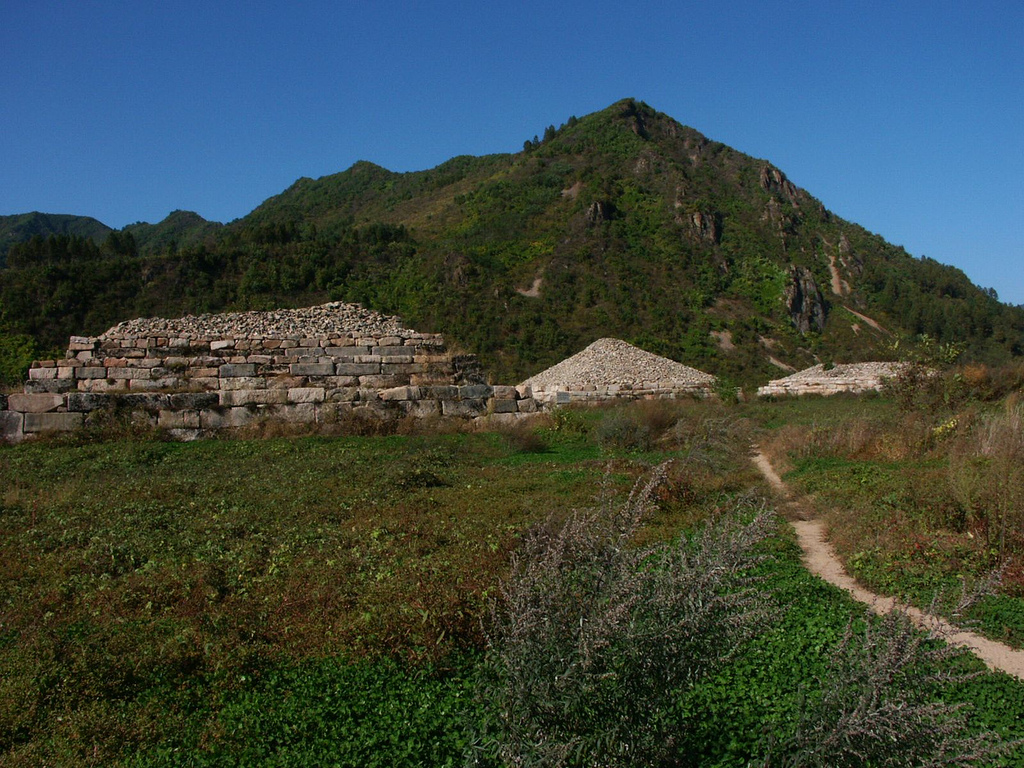
UNESCO site of Goguryeo capitals and tombs in Northeast China.

Wikimedia Commons · CC BY 2.0
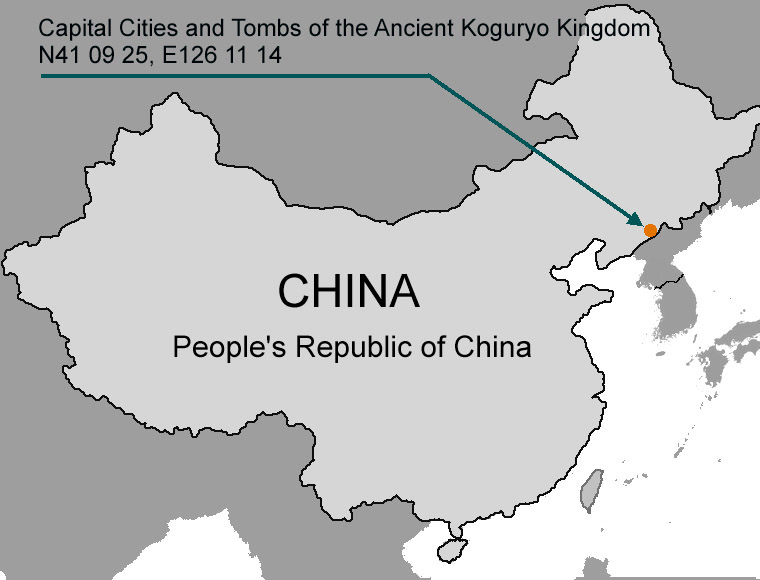
The Capital Cities and Tombs of the Ancient Koguryo Kingdom is a UNESCO World Heritage Site encompassing archaeological remains in Ji'an, Jilin Province, and Huanren, Liaoning Province, Northeast China. Goguryeo (or Koguryo, 'Gaogouli' in Chinese) was a Korean Kingdom that existed from 37 BCE to 668 CE, located in the northern and central parts of the Korean Peninsula and the southern and central parts of Manchuria. The site was designated a cultural World Heritage Site in 2004 under the first five of six criteria, including three fortress-cities—Wunü Mountain City (Onyeosan-seong), Gungnae, and Hwando—and forty tombs of Goguryeo imperial and noble families.
- designation
- UNESCO World Heritage Site (2004)
- location
- Ji'an, Jilin Province and Huanren, Liaoning Province, Northeast China
- kingdom
- Goguryeo (Koguryo, Gaogouli)
- period
- 37 BCE – 668 CE
- includes
- Three fortress-cities and forty tombs
- criteria
- First five of six cultural criteria
Lore & Background
Wunü Mountain City (Onyeosan-seong) was the first capital of Goguryeo, only partly excavated. Gungnae City, within modern Ji'an, later served as a supporting capital after the main capital moved to Pyongyang. Hwando contains a large palace and many tombs. The capital cities are early examples of mountain cities later imitated by neighboring cultures, and their system influenced later Goguryeo capitals. The site represents a blending of human creation with nature, including rocks, forests, and rivers.
Reader's Guide
The Capital Cities and Tombs of the Ancient Koguryo Kingdom are significant as a UNESCO World Heritage Site that preserves the archaeological remains of a major Korean kingdom that ruled parts of northeast China and the northern Korean Peninsula. The three fortress-cities—Wunü Mountain City, Gungnae, and Hwando—demonstrate early mountain city design later imitated by other cultures, and their layout influenced subsequent Goguryeo capitals. The forty tombs, with elaborate ceilings and wall paintings, show artistic skill and cultural influences. The site also reflects a historical dispute between North Korea and China over Goguryeo's heritage, as both countries registered remains simultaneously in 2004 after China opposed North Korea's sole registration. In 2010, China established the Ji'an Gaogouli National Archaeological Park, covering the sites in Jilin but not those in Liaoning. The tombs are considered a masterpiece of human creative genius in their structures and paintings.
Did You Know?
- The site includes three fortress-cities: Wunü Mountain City (Onyeosan-seong), Gungnae, and Hwando.
- Forty tombs of Goguryeo imperial and noble families are part of the designation.
- North Korea and China registered Goguryeo remains simultaneously in 2004 after a dispute.
- In 2010, China established the Ji'an Gaogouli National Archaeological Park covering sites in Jilin.
A Contested Heritage: The Road to UNESCO Recognition
The path to World Heritage status for the Goguryeo sites was far from straightforward. North Korea first moved to register the ruins around 2000, and the listing was initially expected to be finalized in 2003. However, China objected to a registration that would have been attributed solely to the North Korean state. Beijing instead pressed for the inclusion of the Goguryeo remains scattered across its own Jilin Province. The compromise produced a simultaneous registration in 2004, under which both the North Korean and Chinese portions of the site were inscribed together. The designation met the first five of UNESCO's six criteria for cultural heritage. The episode underscored a deeper, acknowledged tension: both nations claim a stake in the historical narrative of Goguryeo, a kingdom that spanned the northern and central Korean Peninsula as well as the southern and central regions of Manchuria from 37 BCE to 668 CE. The resulting World Heritage listing now encompasses sites in Ji'an (Jilin Province) and Huanren (Liaoning Province) in Northeast China, standing as a tangible reminder that heritage can be as politically charged as it is culturally significant.
Fortress-Cities Carved into the Landscape
The Goguryeo kingdom, which endured from 37 BCE to 668 CE, left behind three remarkable fortress-cities that now form part of the World Heritage ensemble. Wunü Mountain City, also known as Onyeosanseong, served as the kingdom's first capital, though it remains only partly excavated. Gungnae City, situated within the modern city of Ji'an, took on a supporting role after the primary seat of power shifted to Pyongyang. Hwando, the third capital, preserves a large palace complex alongside numerous tombs. What makes these settlements architecturally significant is their status as an early model of mountain cities, a concept that neighbouring cultures later adopted and imitated. The urban planning system embodied by Gungnae and Wunü Mountain City went on to shape the construction of subsequent capitals built under the Goguryeo regime. Perhaps most striking is the way each city achieves what UNESCO describes as a seamless fusion of human ingenuity with the natural environment, integrating living rock, dense forests, and flowing rivers into the very fabric of the built landscape rather than imposing upon it.
Engineering and Artistry Beneath the Mounds
Forty tombs of Goguryeo imperial and noble families are included in the World Heritage listing, testifying to a civilization that ruled across parts of northeast China and the northern half of the Korean Peninsula. The structural engineering of these burial chambers is particularly impressive: several feature elaborate ceilings engineered to span wide interior spaces entirely without the support of columns, yet still bear the enormous weight of the stone or earth tumulus heaped above them. Beyond their architectural ambition, the tombs are celebrated as masterpieces of human creative genius, largely because of their wall paintings. These murals display a distinctive artistic style and considerable technical skill, yet they also reveal the strong influence of multiple external cultures, suggesting a society that absorbed and synthesized diverse artistic traditions. The combination of structural daring and painterly richness makes the Goguryeo tombs a unique window into a kingdom that balanced indigenous identity with cosmopolitan exchange, producing works that remain visually compelling more than thirteen centuries after they were sealed underground.
A Living Legacy in the Modern Landscape
The Goguryeo heritage does not end at the UNESCO inscription. In 2010, the Chinese government established the Ji'an Gaogouli National Archaeological Park, a protected zone that encompasses all the Goguryeo World Heritage Sites located in Ji'an and Jilin Province. Notably, this park does not extend to the Liaoning-based sites such as Wunü Mountain City, reflecting the administrative boundaries that still shape how the heritage is managed and presented. The broader cultural footprint of Goguryeo extends well beyond these Chinese sites: a separate UNESCO World Heritage listing for Goguryeo tombs exists in Pyongyang, North Korea, and the Ancient Tombs at Longtou Mountain, which include the Mausoleum of Princess Jeonghyo of Balhae, represent yet another thread in the region's layered past. The capital-city model pioneered by Goguryeo, its mountain-fortress planning and its integration of natural terrain, continued to influence neighbouring cultures long after the kingdom's fall in 668 CE, ensuring that the architectural and urban ideas born in these sites echo through centuries of East Asian history.
Gallery
Frequently Asked Questions
Where exactly is the Capital Cities and Tombs of the Ancient Koguryo Kingdom located?
The site spans two areas in Northeast China: Ji'an in Jilin Province and Huanren in Liaoning Province. These are the regions where the surviving archaeological remains of the ancient kingdom are concentrated.
What does the Koguryo Kingdom World Heritage Site actually include?
The inscription covers three fortress-cities—Wunü Mountain City (Onyeosan-seong), Gungnae, and one other—along with forty royal and elite tombs. Together these structures and burial sites form the core of the heritage listing.
When was the Koguryo Kingdom site designated by UNESCO, and under which criteria?
UNESCO inscribed it as a cultural World Heritage Site in 2004. It was recognized under the first five of the six cultural criteria, reflecting its significance across multiple dimensions of universal value.
What was the Koguryo (Goguryeo) Kingdom, and what period did it span?
Koguryeo, also called Goguryeo or Gaogouli in Chinese, was a Korean kingdom that lasted from 37 BCE until its fall in 668 CE. Its territory covered the northern and central Korean Peninsula as well as the southern and central parts of Manchuria.
Why do fans and historians consider the Koguryo Kingdom site so important?
It preserves the rare physical legacy of a major East Asian kingdom that endured for more than seven centuries, offering direct evidence of its urban planning, funerary traditions, and cultural identity. The breadth of its UNESCO criteria recognition underscores how it touched on nearly every major dimension of cultural heritage.
More in World Heritage Sites in China 1-24
Spotted an error? Know more?
This is a living reference — every entry is fact-audited, and reader corrections feed straight into our audit queue. Suggest an edit · See this site's audit record