
China Danxia
A set of red-bed landscapes inscribed as a World Heritage Site.

Ron Van Oers · CC BY-SA 3.0 igo
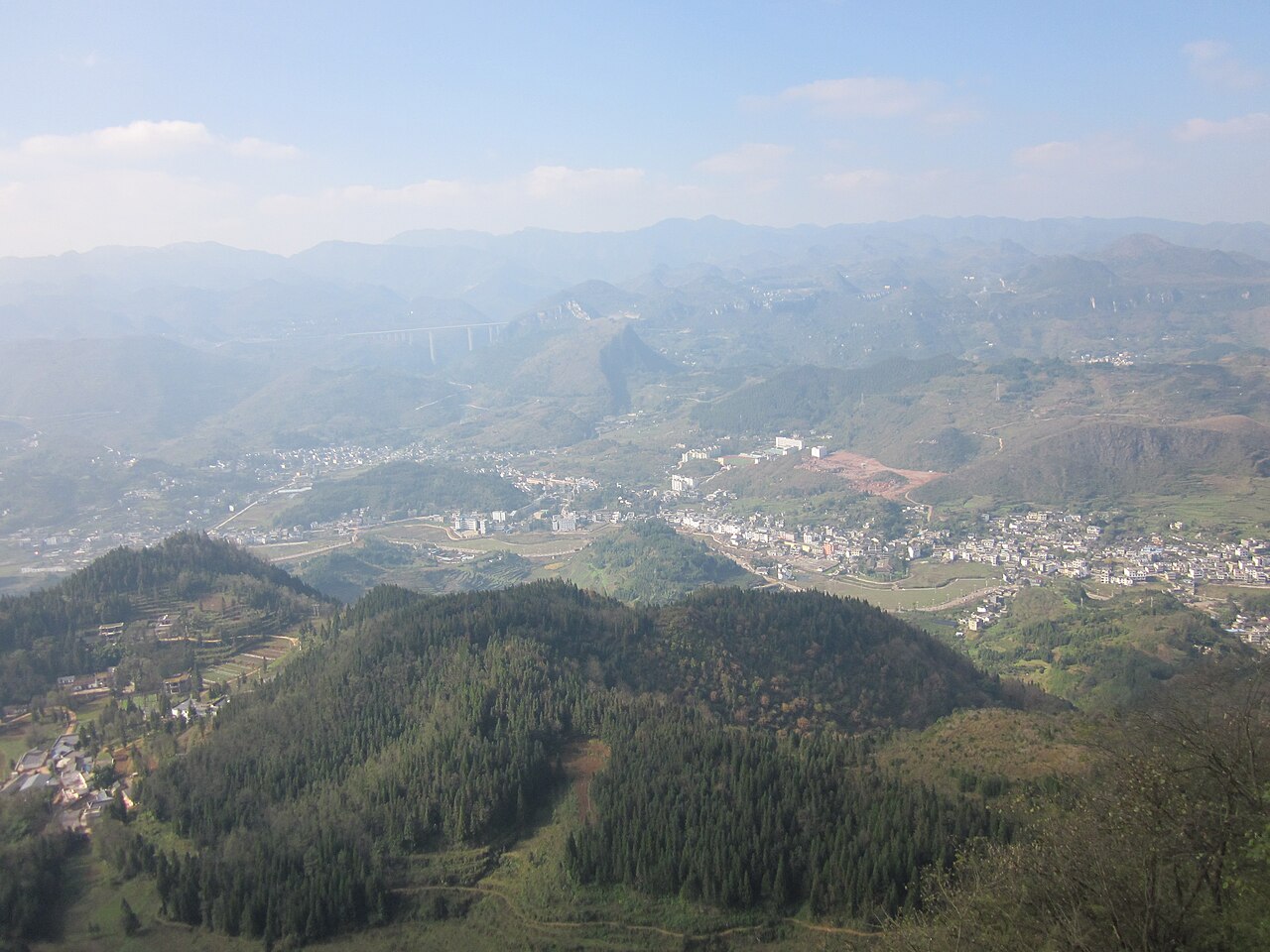
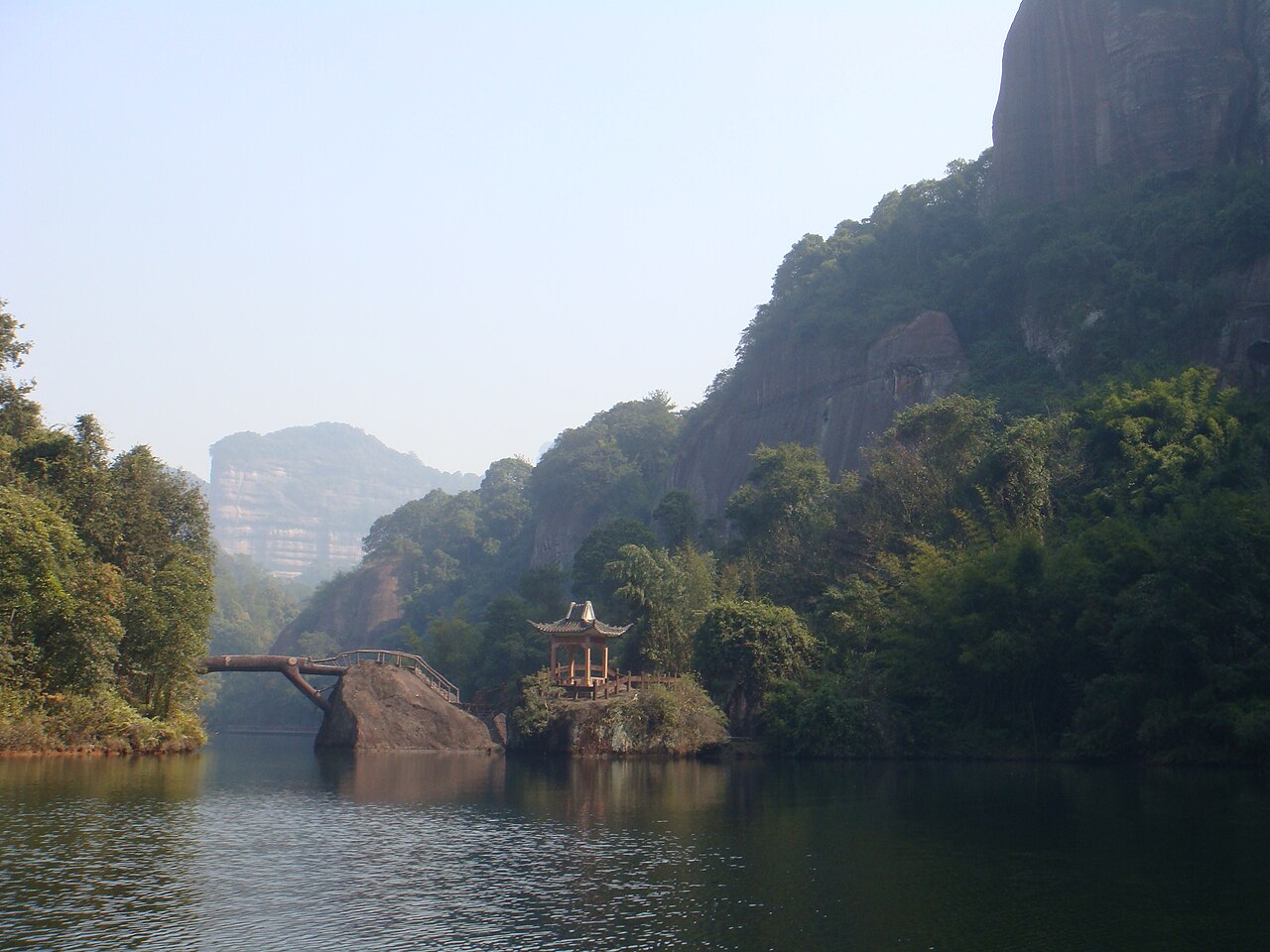
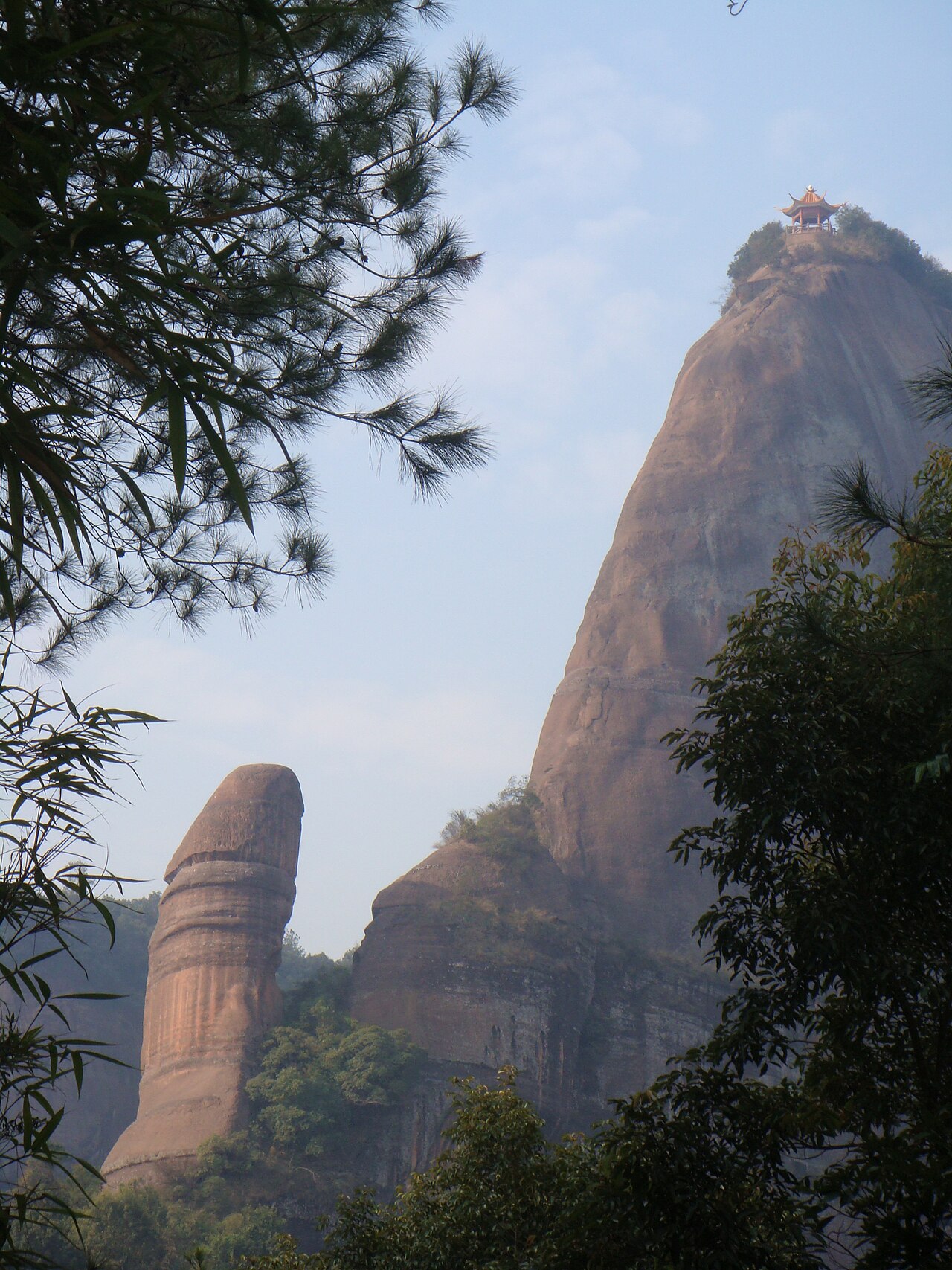
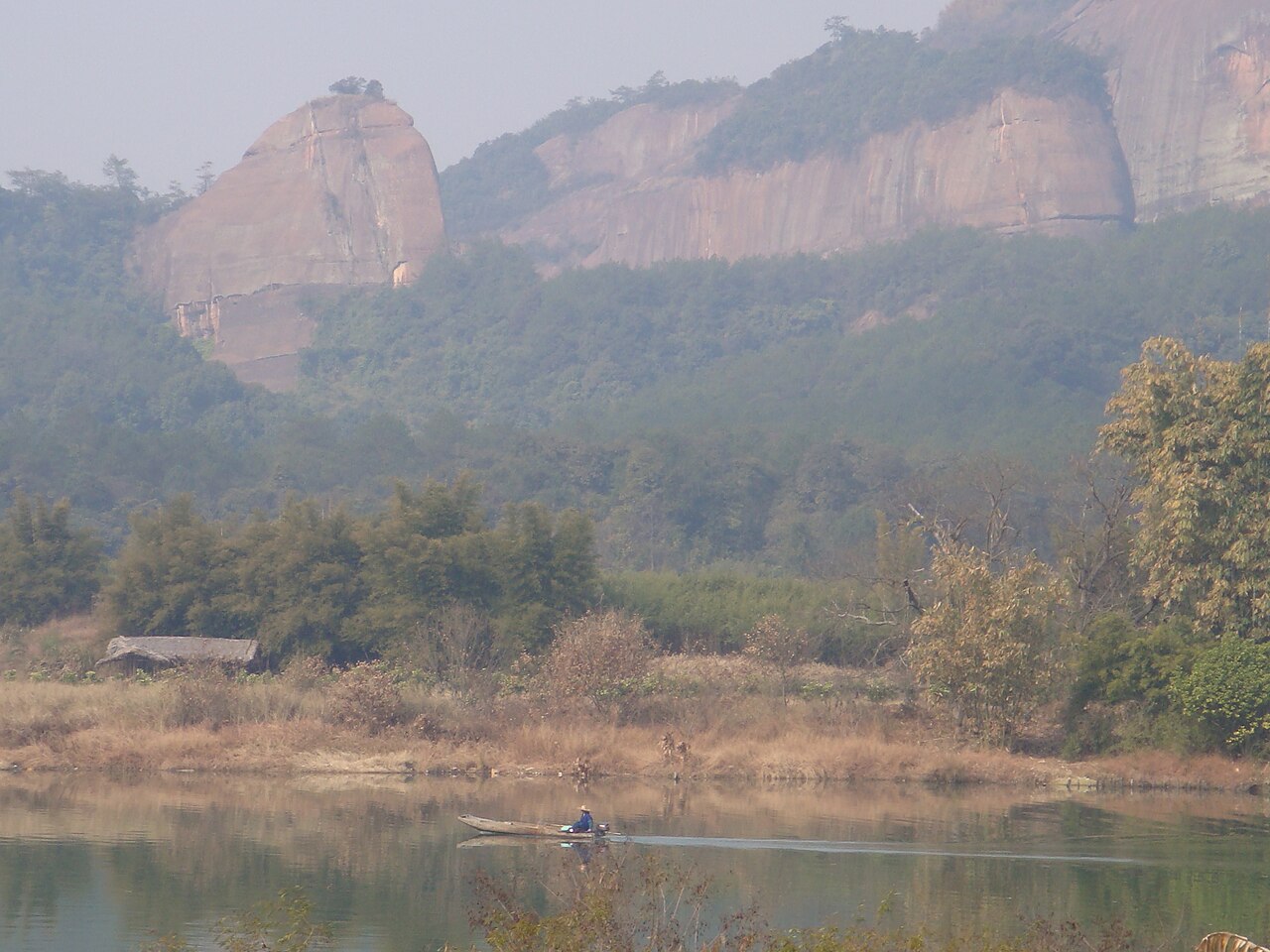
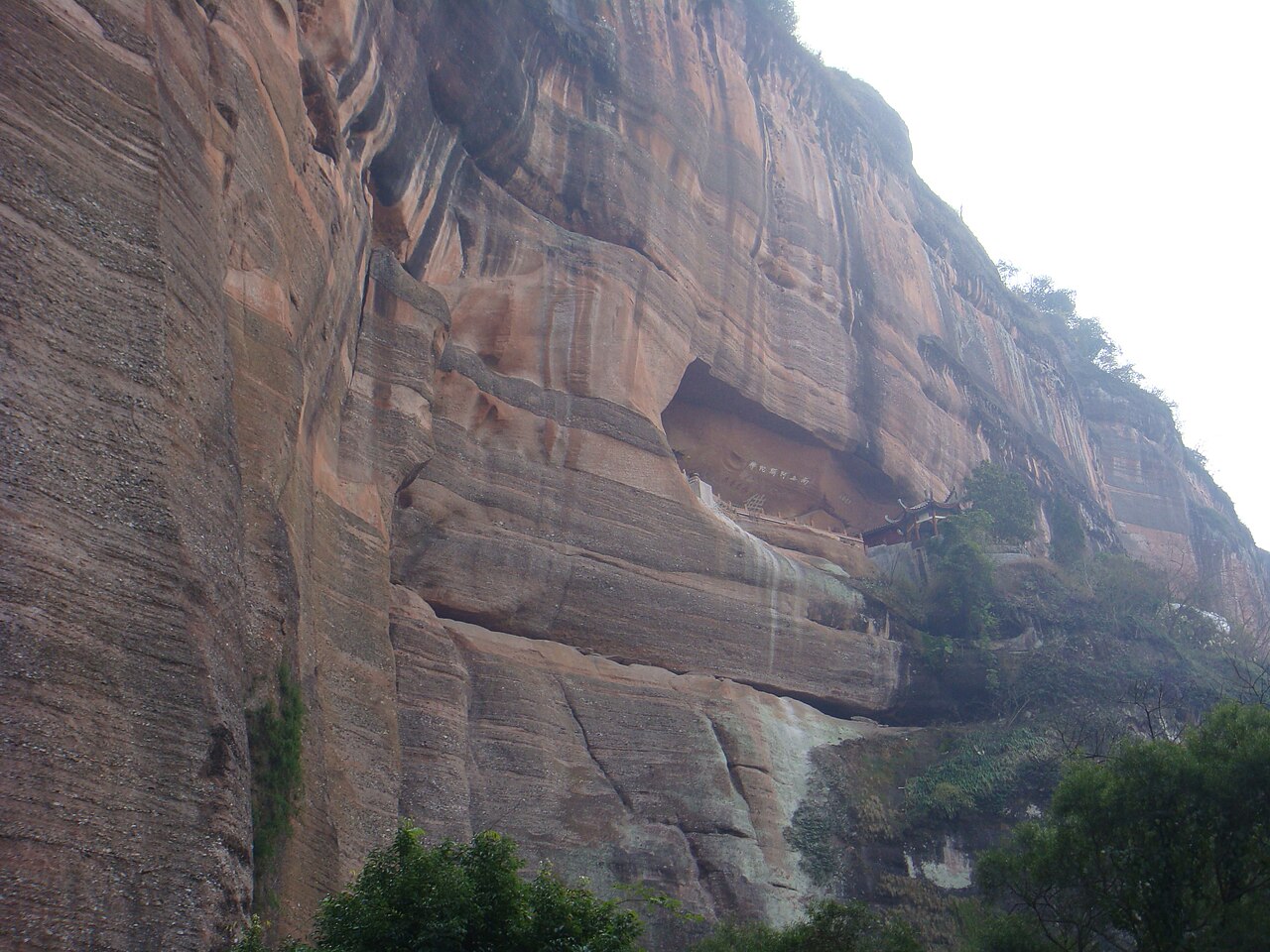
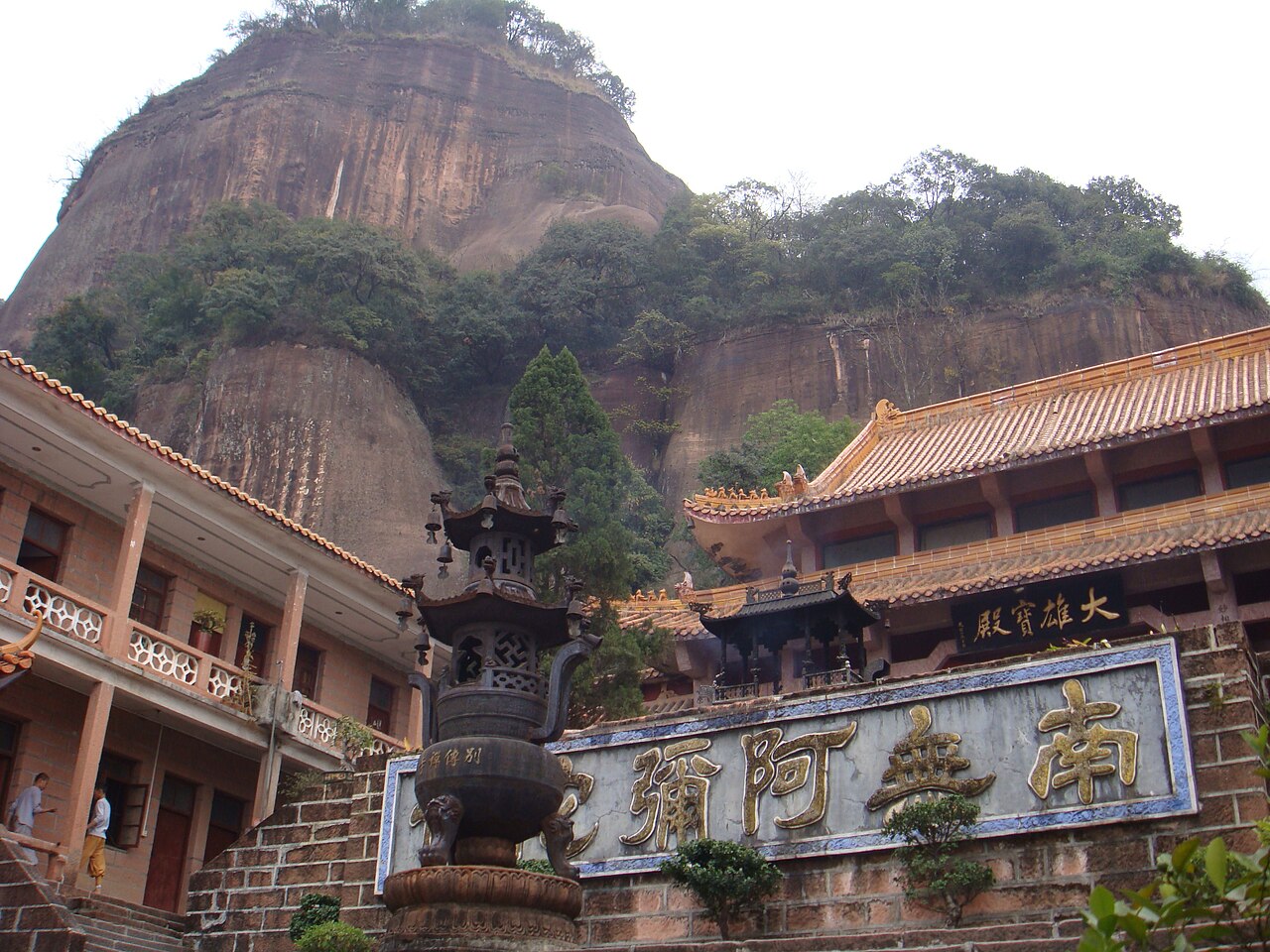
China Danxia is a subset of the Danxia landform of China, which in August 2010 entered the World Heritage List. These landscapes, found in southeast, southwest and northwest China, consist of red beds characterized by steep cliffs, formed from red-colored sandstones and conglomerates of largely Cretaceous age. The six inscribed danxia landform areas are Langshan (Hunan Province), Danxiashan (Guangdong Province), Taining (Fujian Province), Longhushan (Jiangxi Province), Jianglangshan (Zhejiang Province), and Chishui (Guizhou Province).
- field
- Petrographic geomorphology
- nationality
- China
- known_for
- Unique red-bed landscapes with steep cliffs, inscribed as a World Heritage Site in 2010
- total_core_area_hectares
- 73945
- total_buffer_area_hectares
- 65446
Lore & Background
The first studies on what are now referred to as Danxia landforms were conducted at Mount Danxia near Shaoguan, China. In the 1920s and 1930s Chinese geologists made an effort to learn more about these interesting geomorphic structures. In 1928, the mineral scientist Feng Jinglan noticed the widespread distribution of the red oxidation layer and realized this was an undescribed landform, naming it danxia from a 3rd-century poem by Cao Pi.
Reader's Guide
China Danxia represents a unique type of petrographic geomorphology found in China, formed by endogenous forces (including uplift) and exogenous forces (including weathering and erosion). The landforms look very much like karst topography but are called 'pseudo-karst' because they are made of sandstones and conglomerates rather than limestones. A very peculiar feature is the development of numerous shallow, isolated caves, unlike true karst terrain. The World Heritage listing in 2010 recognized six areas covering a total core area of 73,945 hectares and a buffer area of 65,446 hectares. These landscapes are significant for their geological processes and distinctive red cliffs, towers, and ridges, with younger forms showing deep, narrow valleys and older forms exhibiting isolated towers and ridges. Other notable danxia areas, such as Zhangye Danxia National Geological Park, are not included in the World Heritage Site.
Did You Know?
- China Danxia was inscribed as a World Heritage Site in August 2010.
- The name 'danxia' comes from a 3rd-century poem by Cao Pi, meaning 'vermilion sunglow'.
- Danxia landforms are formed from red-colored sandstones and conglomerates of largely Cretaceous age.
- The six inscribed areas cover a total core area of 73,945 hectares.
The Architecture of Heritage Recognition
The UNESCO World Heritage Convention, which came into being in 1972, established a global framework for identifying places of outstanding significance to humanity's shared cultural and natural legacy. Under this system, cultural heritage encompasses a broad range of human-made achievements—architectural masterpieces, monumental sculptures, inscriptions, entire groups of buildings, and archaeological sites. Natural heritage, by contrast, covers physical and biological formations, geological and physiographical features, habitats supporting threatened species, and landscapes valued for their scientific, conservation, or aesthetic importance. To qualify, every candidate site must satisfy at least one of ten distinct criteria. The first six, labeled i through vi, address cultural merit, while criteria vii through x evaluate natural significance. This dual-track structure ensures that both human ingenuity and the Earth's own creations receive formal international recognition.
China's Standing Among the World's Heritage Powers
Since formally accepting the World Heritage Convention on 12 December 1985, China has steadily built one of the most extensive collections of internationally recognized heritage sites on the planet. Today the country holds sixty-one inscribed sites, placing it in second position globally, trailing only Italy's sixty-two. The composition of China's portfolio reveals a strong emphasis on human-made achievement: forty-two sites are designated for their cultural value, fifteen are recognized for their natural attributes, and four carry the distinction of mixed cultural-and-natural status. Beyond the inscribed list, China maintains sixty additional sites on its tentative register, signaling a deep bench of candidates that could one day join the permanent roster. This combination of breadth in numbers and diversity in category underscores how central heritage preservation has become to the nation's identity within the international community.
Milestones and Cross-Border Collaboration
China's journey on the World Heritage List began in 1987, when six sites were inscribed in a single batch, marking the country's first entry into the international register. More than three decades later, the program continued to evolve, with the most recent addition arriving in 2026: the Jingdezhen Handicraft Porcelain Industry Sites, a testament to centuries of ceramic craftsmanship that finally received global recognition. Not every entry on China's list is confined to a single nation. The Silk Roads: the Routes Network of Chang'an-Tianshan Corridor stands out as a transnational site, jointly inscribed with Kazakhstan and Kyrgyzstan. This shared designation highlights how ancient trade networks transcended modern borders and how contemporary heritage diplomacy can unite multiple countries around a common historical narrative. From those initial six sites in 1987 to the porcelain workshops of 2026, the arc of China's inscriptions spans an extraordinary range of eras, disciplines, and collaborative models.
The Pathway to Inscription
Before any site can be formally nominated for the World Heritage List, it must first appear on its country's tentative list—a prerequisite that ensures only carefully considered candidates enter the competitive nomination process. China currently holds sixty sites on this waiting register, a substantial pipeline that reflects ongoing domestic efforts to identify and prepare locations worthy of international designation. The tentative list serves as a planning tool for member states, allowing them to signal which places they may pursue in future cycles. Related frameworks, such as the designation of national priority protected sites and the broader principles governing conservation of heritage sites within China, further structure how the nation manages its cultural and natural assets before and after inscription. Together, these layered mechanisms create a disciplined pathway from local identification through to global recognition, ensuring that each site reaching the final list has undergone rigorous preparation and meets the ten established criteria for cultural or natural significance.
Gallery
Frequently Asked Questions
What is China Danxia?
China Danxia is a group of six red-bed landscape areas across China that earned UNESCO World Heritage status in August 2010. It showcases the distinctive Danxia landform, a type of terrain built from red sandstones and conglomerates that have eroded into dramatic steep cliffs.
Which six areas make up the China Danxia World Heritage Site?
The inscribed sites are Langshan (Hunan), Danxiashan (Guangdong), Taining (Fujian), Longhushan (Jiangxi), Jianglangshan (Zhejiang), and Chishui (Guizhou). Together they encompass roughly 73,945 hectares of core area and about 65,446 hectares of surrounding buffer zone.
What kind of rock and age define the Danxia landscape?
The formations are composed primarily of red-colored sandstones and conglomerates that date largely to the Cretaceous period. Over millions of years these layers have been carved into the steep, crimson cliffs that give the Danxia landform its iconic appearance.
Why is China Danxia significant enough for World Heritage recognition?
It was inscribed under the petrographic geomorphology category for preserving an outstanding and well-documented example of red-bed landforms. The six sites collectively demonstrate how the same Cretaceous geology can produce striking cliff landscapes in very different parts of the country.
Where in China are the Danxia sites located?
The six areas are spread across southeast, southwest, and northwest China, spanning provinces from Hunan and Guangdong in the south to Guizhou in the southwest and Jiangxi in the central-east. This wide geographic range underscores how a single Cretaceous red-bed geology shaped similar dramatic terrain in multiple regions.
More in World Heritage Sites in China 1-24
Spotted an error? Know more?
This is a living reference — every entry is fact-audited, and reader corrections feed straight into our audit queue. Suggest an edit · See this site's audit record