
Archaeological ruins of Liangzhu City
Neolithic city ruins with the earliest known hydraulic system.

xiquinhosilva · CC BY 2.0
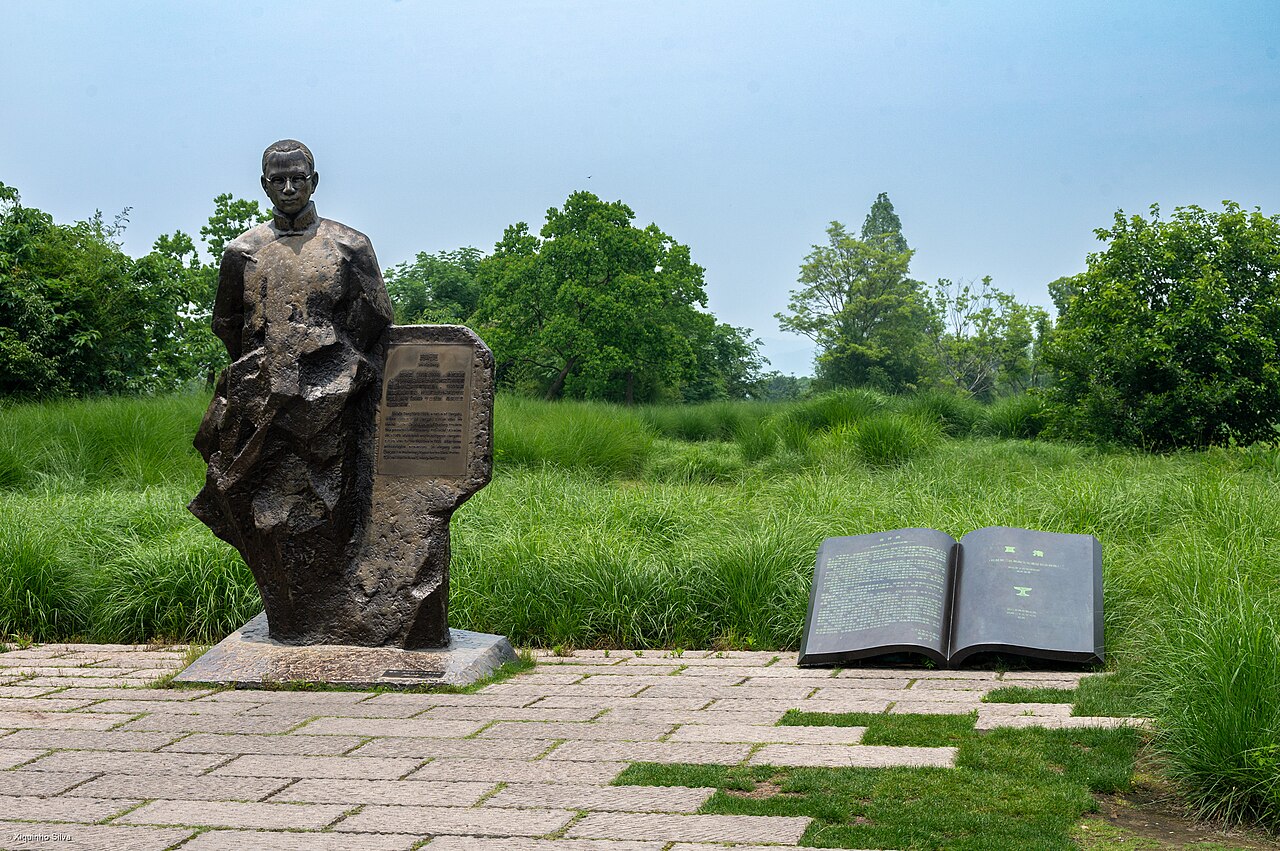
Deep in the Hangzhou countryside, the archaeological ruins of Liangzhu City are actually a collection of Neolithic sites spread across the Liangzhu Subdistrict and Pingyao Town of Yuhang. It all started in 1936, when a local archaeologist named Shi Xingeng began digging. By 1959, experts realized these ruins belonged to a whole new culture—they called it Liangzhu culture. But it wasn't until 2006, when city walls were finally uncovered, that everyone agreed: this was an ancient city.
Sitting in the southwestern part of the Liangzhu cultural area, this city is believed to have been the political and spiritual heart of that civilization. It shows us a prehistoric society that grew rice, built cities, and had an early form of statehood in the Yangtze River basin. The site includes a walled city with palaces, ceremonial spaces, and a complex water system—one of the earliest known hydraulic systems in the world. The city itself is often dated to around 3000–2300 BCE, while the broader Liangzhu culture thrived from about 3300 to 2300 BCE, then was abandoned when massive flooding, tied to climate change, brought the whole civilization down.
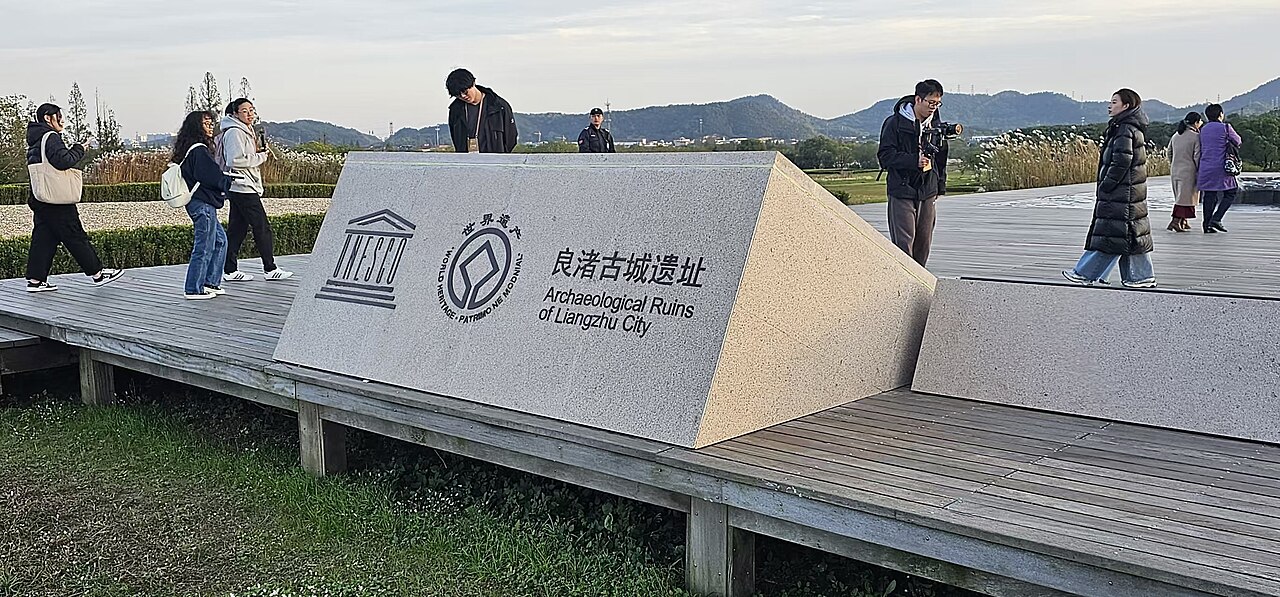
Today, the ruins are considered one of the earliest examples of Chinese civilization. They're managed by the Liangzhu Site District Management Committee, which also runs the Liangzhu National Archaeological Site Park. The city ruins and the Yaoshan site were named major national heritage sites in 1996; the hydraulic system got provincial protection in 2017. Together, all these sites became a UNESCO World Heritage Site in 2019.
**Discovery**
Back in the 1930s, workers building a national highway through Liangzhu dug up some jade. Only a few pieces, and everyone assumed they were from the Xia, Shang, Zhou, or Han dynasties. Then, in 1936, Shi Xingeng from the West Lake Museum was excavating the Gudang site near Laohe Hill. He noticed black pottery and stone tools that looked just like ones he'd seen back home in Liangzhu. That sparked small digs in Liangzhu, though at first people thought the relics belonged to the Longshan culture.
Starting in 1953, excavations in Hangzhou, Wuxi, and Huzhou showed more and more differences from Longshan. In 1959, Xia Nai named this primitive culture in the lower Yangtze "Liangzhu culture." The name stuck after elite Liangzhu tombs turned up at several spots.
In 1973, archaeologists were stu
- Location
- Liangzhu Subdistrict and Pingyao Town, Yuhang, Hangzhou, China
- Period
- Approximately 3000 to 2300 BCE (city); 3300 to 2300 BCE (broader Liangzhu culture)
- First Excavated
- 1936 by Shi Xingeng
- Culture Named
- 1959 by Xia Nai
- City Walls Discovered
- 2006
- UNESCO Designation
- 2019
- Area
- 14.3 square kilometers (5.5 sq mi)
Lore & Background
In the 1930s, jade unearthed during highway construction was initially assumed to date to later dynasties. In 1936, Shi Xingeng excavated the Gudang site near Laohe Hill, reminded of similar black pottery and stone tools from his hometown Liangzhu, triggering small-scale excavations. Relics were first believed to be of Longshan culture. From 1953, excavations in Hangzhou, Wuxi, and Huzhou pointed to differences, and in 1959 Xia Nai named the primitive culture 'Liangzhu culture.' In 1973, sophisticated jade artefacts from elite tombs were found to be approximately 5,000 years old. In 1986, over 3,000 jade pieces were excavated at Fanshan. In 1987, rumors of jade at Yaoshan led to looting by farmers until police and archaeologists intervened.
Reader's Guide
The Liangzhu ruins represent one of the earliest examples of Chinese civilization, existing from approximately 3300 to 2300 BCE. The site includes a walled city with palatial complexes, ceremonial areas, and an intricate hydraulic system—by far the earliest known in the world. The hydraulic system, covering nearly 100 square kilometers, includes high dams, low dams, and levees for flood control, irrigation, and transport. The city's 'triple city' structure spans 631 hectares, with the Mojiaoshan palatial compound built on an artificial mound. Over 600 Liangzhu settlement sites exist across the lower Yangtze region. The city was ultimately abandoned due to extensive flooding linked to climate change. The ruins, along with Yaoshan, were designated a major cultural heritage site in 1996; the hydraulic system received provincial protection in 2017. Together, they became a UNESCO World Heritage Site in 2019.
Did You Know?
- The hydraulic system of Liangzhu is by far the earliest known in the world.
- More than 3,000 jade pieces were excavated at the Fanshan site in 1986.
- The city was abandoned due to extensive flooding linked to climate change.
- The Mojiaoshan palatial compound was built on an artificial trapezoidal mound covering about 30 hectares.
From Jade Fragments to a Lost Metropolis
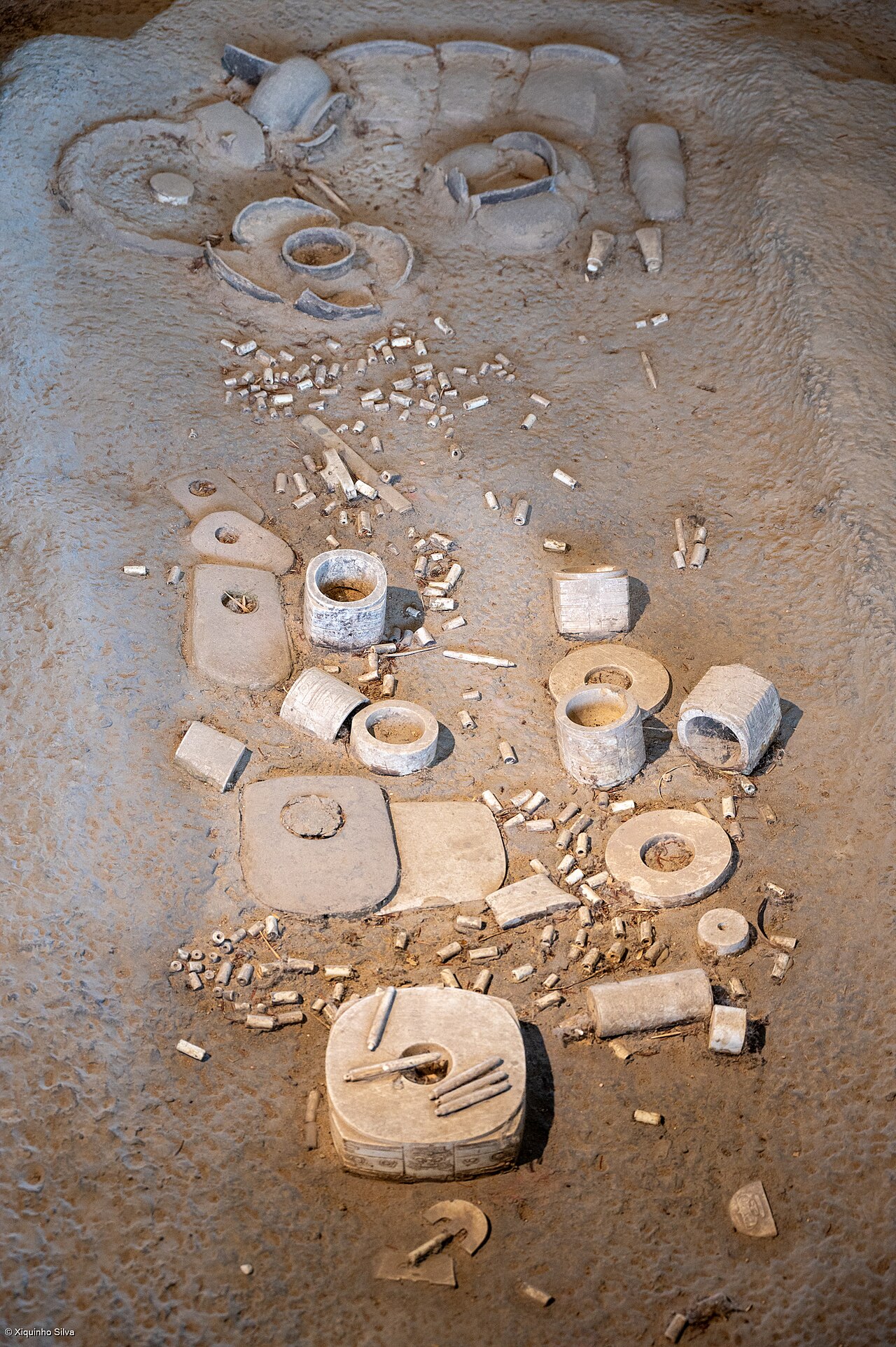
In the 1930s, workers building a highway linking Nanjing and Hangzhou stumbled upon small quantities of jade near Liangzhu, which were initially attributed to the Xia, Shang, Zhou, or Han dynasties. The breakthrough came in 1936 when Shi Xingeng, a researcher at the West Lake Museum, excavated the Gudang site near Laohe Hill and recognized black pottery and stone tools that matched artefacts he had seen in his hometown of Liangzhu. This prompted modest digs in the town, though the finds were still misclassified as Longshan culture. It was not until excavations across Hangzhou, Wuxi, and Huzhou from 1953 onward revealed clear distinctions that Xia Nai formally named the tradition Liangzhu culture in 1959. The 1973 unearthing of extraordinarily refined jade pieces from elite burials, dated to roughly five millennia ago, shocked the archaeological community. By 1986, over three thousand jade fragments had been recovered at the Fanshan cemetery alone. The definitive revelation arrived in 2006, when Liu Bin's team, working to relocate farmers from the Putaofan plateau, uncovered a stone layer three metres below the surface that proved to be a city wall. Subsequent coring across one hundred square kilometres finally exposed the full urban plan.
Engineering a Prehistoric Metropolis
Nestled in a C-shaped basin where the western Zhejiang mountains give way to the Hangzhou-Jiaxing-Huzhou Plain, the Liangzhu urban core was a masterwork of Neolithic planning. The East Tiaoxi River threaded through the settlement from southwest to northeast, weaving a network of channels among low mounds and providing a direct waterway link to Taihu Lake to the northeast. To harness this hydrology, the inhabitants engineered a vast water conservancy system northwest of the city, widely regarded as the earliest large-scale water-management project known anywhere in the world. It regulated flood control, irrigation, and transport across nearly one hundred square kilometres. The city itself followed a triple-city layout: a Palace Area, an Inner City, and an Outer City, together spanning roughly 631 hectares. Fortified ramparts incorporated both water and land gates, while terraced platforms and a web of natural and artificial canals stitched the districts together. The inner walled zone covered about three square kilometres; adding the outer ring pushed the total to 6.3 square kilometres. Beyond these walls, the polity exercised authority over more than forty square kilometres of the basin, which hosted over a hundred affiliated Liangzhu sites.
Jade, Ritual, and the Architecture of Power
The Liangzhu city functioned as both the political seat and the spiritual heart of a rice-cultivating early state in the lower Yangtze basin, flourishing from roughly 3300 to 2300 BCE. At its centre, the Mojiaoshan palatial compound rose on a massive trapezoidal earthen mound, anchoring a complex of ceremonial spaces that signalled centralised governance. The society's artistic and spiritual life is most vividly preserved in its cemeteries. At Fanshan and Jiangjiashan, archaeologists recovered a combined total of 4,229 jade artefacts, elaborate discs, blades, and pendants whose craftsmanship astonished researchers when first identified in 1973 as approximately five thousand years old. The sheer volume of jade, with more than three thousand pieces alone from the Fanshan burial ground, testifies to a highly stratified aristocracy and a sophisticated workshop tradition. The civilisation's end was not conquest but environment: extensive flooding tied to climate change ultimately rendered the low-lying basin uninhabitable, and the city was abandoned, its people scattered.
From Provincial Digs to World Heritage
Today the Liangzhu ruins are stewarded by a dedicated Site District Management Committee that operates the Liangzhu National Archaeological Site Park. The path to international recognition was gradual. In 1996, the city ruins together with the nearby Yaoshan cemetery were elevated to the status of major cultural heritage sites under national protection. A decade and a half later, in 2017, the hydraulic system received its own provincial-level designation, acknowledging its singular engineering significance. The culmination came in 2019, when the combined ensemble, four interconnected sites bound by shared social and cultural threads and a continuous chronological sequence, was inscribed as a UNESCO World Heritage Site. The designated heritage property covers one hundred square kilometres, ringed by a buffer zone of nearly ten thousand hectares. The inscription cemented Liangzhu's standing as one of the earliest documented expressions of Chinese civilisation and brought renewed attention to a culture whose jade artefacts, since the 1987 Yaoshan looting incident, had already found their way into the global antique trade.
Gallery
Frequently Asked Questions
Where exactly are the Archaeological Ruins of Liangzhu City located?
The site is spread across Liangzhu Subdistrict and Pingyao Town in Yuhang, sitting in the southwestern countryside of Hangzhou, Zhejiang Province. It occupies the southwestern portion of the wider Liangzhu cultural area.
When and by whom were the Liangzhu ruins first uncovered?
Local archaeologist Shi Xingeng began excavating the site in 1936, and by 1959 specialists had recognized it as a previously unknown cultural tradition. The actual city walls, which confirmed this was a true urban settlement, were not identified until 2006.
What makes Liangzhu City's hydraulic system so remarkable?
Liangzhu is credited with the earliest known large-scale hydraulic engineering in China, a network of dams and channels built to manage water for farming and flood protection. Dated to roughly 3000–2300 BCE, it predates comparable water-management projects elsewhere in the world by millennia.
Why did UNESCO designate Liangzhu as a World Heritage Site in 2019?
The inscription recognizes that the ruins provide physical proof of an organized, politically structured society in the lower Yangtze region far earlier than scholars had previously assumed. It fundamentally reshapes the timeline for how urbanization and state-level governance emerged in East Asia.
What time period does the Liangzhu City site belong to?
The city itself dates to approximately 3000–2300 BCE, while the broader Liangzhu cultural tradition extends from roughly 3300 to 2300 BCE. Both ranges place the site firmly in the Neolithic, well before the Bronze Age dynasties that followed.
More in World Heritage Sites in China 1-24
Spotted an error? Know more?
This is a living reference — every entry is fact-audited, and reader corrections feed straight into our audit queue. Suggest an edit · See this site's audit record